Castel Gandolfo Tickets: Direct Booking vs. Guided Tours
Booking tickets for the Papal Palace and Gardens of Castel Gandolfo is not difficult.
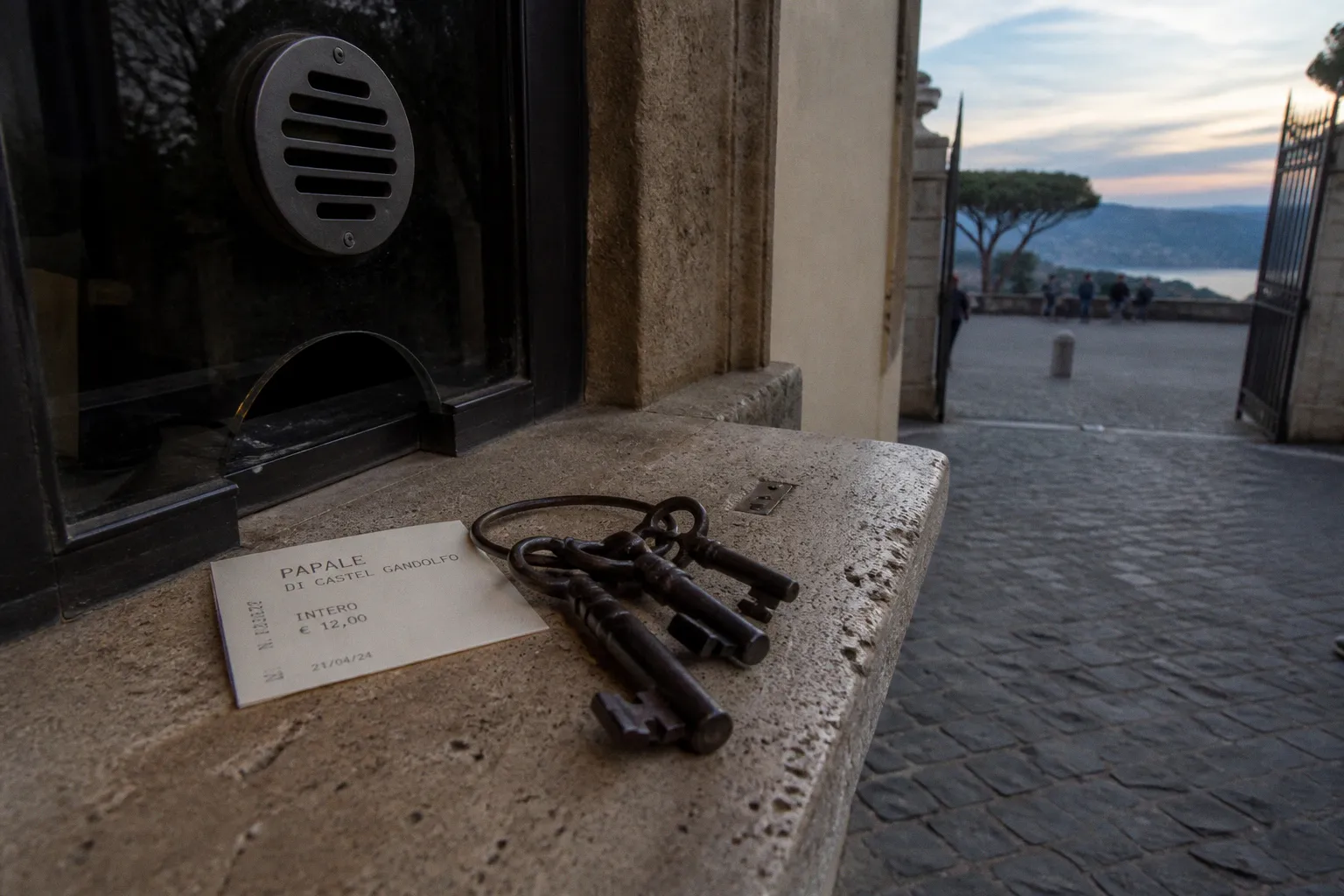
Paying more than necessary, choosing the wrong access level, or arriving with a beautiful but useless assumption about what your ticket includes is considerably easier.
Tickets and prices
Papal Palace & Gardens of Castel Gandolfo
| Option | Type | Duration | Rating | From | |
|---|---|---|---|---|---|
| Entry ticket · Skip-the-line accessGetYourGuide | entry ticket | 1.5–2 hr | ★ 4.2303 reviews | from€26 | Book online |
| Entry ticket · Palace & garden accessGetYourGuide | entry ticket | 2 hr | ★ 3.9131 reviews | from€20 | Book online |
| Guided tour · Minibus & audio guideGetYourGuide | guided tour | 1–2 hr | ★ 4.0267 reviews | from€30 | Book online |
| Official ticket · Full entryOfficial | official ticket | — | — | from€20 | Book online |
At the box officeAdult€12Reduced€5Official website — museivaticani.va
The basic choice is straightforward: book directly through the official Vatican Museums portal for the lowest base cost and self-guided access, or buy a third-party tour that adds a guide, transport, estate access, or some combination of the three. Neither option is automatically superior. One buys admission. The other buys logistics and interpretation. Confusing those products is how tourism turns into boardroom theater with a confirmation email.
Castel Gandolfo sits roughly 24–25 kilometers southeast of Rome, above Lake Albano. The journey from Rome Termini takes about 40 minutes by train, before you account for the walk, local connections, waiting time, and the usual Italian contribution to suspense. The destination is close enough for a half-day visit, but only if the ticket and transport plan agree with each other.
Official Vatican portals vs. third-party resellers
The official place to book Papal Palace & Gardens of Castel Gandolfo admission is the Vatican Museums ticket portal. Direct booking offers the lowest base price for standard self-guided entry and keeps the transaction tied to the institution operating the site.
That matters because Castel Gandolfo tickets online are not all selling the same thing. A direct admission ticket and a guided package may both promise access to the Papal Palace, yet one may cover only the palace while the other includes a live guide, a wider portion of the gardens, transport from Rome, or a bundled sightseeing route.
The official portal is the cleanest choice when you already know how to get to Castel Gandolfo and do not need someone to narrate every corridor. It is also the sensible option for repeat visitors, independent travelers, and anyone who regards agency fees as a mild form of cash flow hemorrhage.
Third-party booking becomes more defensible when the package solves a real operational problem. For example:
- You want transportation arranged from Rome rather than assembling train, walking, and local transfer details yourself.
- You prefer a live guide who can explain the Apostolic Palace, papal apartments, gardens, and the site’s transition into a museum.
- You want extended access to the Barberini Gardens or a wider estate experience than basic palace admission provides.
- You are traveling with people who will not enjoy navigating a regional train and an unfamiliar town without assistance.
- Your schedule is tight enough that one coordinated booking is worth the markup.
The problem is not that third-party operators charge more. The problem is pretending the markup does not exist. Third-party tickets are commercial products, not secret Vatican discounts. Their higher prices generally reflect agency fees, guide services, transport, or bundled access. Sometimes that is useful. Sometimes it is a polished wrapper around a ticket you could have bought directly.
A guided tour is worth paying for when it removes friction or adds expertise—not when it merely adds another logo to the booking page.
What the official ticket usually means
Direct Vatican admission is designed for visitors who can manage themselves once they arrive. It is not a private escort, a Rome transfer, or an interpretive performance. You receive access under the conditions attached to the selected ticket, then proceed through the visitor route at your own pace or within the site’s operating rules.
The exact availability of entry slots, visiting dates, and any current access restrictions should be checked in the official booking system before you travel. Opening hours are not a decorative detail, especially for a destination outside central Rome. A cheap ticket for a day that does not fit your transport plan is not a bargain. It is a small administrative failure wearing comfortable shoes.
The Vatican Museums portal also warns visitors about third-party websites charging inflated prices. That warning should not be read as a command to avoid every tour operator. It is a reminder to identify who is selling official admission, who is reselling it, and what additional service you are actually buying.
The cost structure: base admission, agency markup, and bundled services
The papal palace castel gandolfo entry fee is easiest to understand when separated into three layers:
1. Institutional admission — the direct cost of entering the palace or selected visitor area.
2. Booking and agency charges — the amount added by a reseller or tour platform.
3. Added services — guide, transportation, garden access, open-bus routing, or other bundled features.
Direct Vatican tickets cover the first layer. A third-party tour may include all three. The final price can therefore vary substantially without either booking being fraudulent or exceptional. They are different products.
Here is the practical comparison:
| Booking route | What it is best for | Typical inclusions | Main advantage | Main drawback |
|---|---|---|---|---|
| Official Vatican portal | Independent visitors | Standard entry, selected palace or garden access according to the ticket | Lowest base cost and direct institutional booking | You arrange transport and interpretation yourself |
| Third-party entry ticket | Visitors who want convenience at checkout | Admission with reseller handling and possible timed access | Simpler purchasing experience and more package choices | Higher cost and less clarity if inclusions are vague |
| Guided palace tour | Visitors who want historical context | Admission plus a live guide | Better explanation of rooms, papal history, and restricted-use spaces | Fixed pace and higher price |
| Garden-focused package | Visitors prioritizing the estate | Access to garden areas, sometimes including Barberini Gardens | Wider view of the 55-hectare property | May not include every palace interior or transport |
| Rome transfer package | First-time visitors or tight schedules | Transport from Rome plus admission and possibly a guide | Reduces navigation and connection risks | Most expensive route and least flexible timing |
The phrase “gardens included” deserves particular scrutiny. Castel Gandolfo is associated with a large estate of approximately 55 hectares, but not every garden-related ticket gives access to the same areas. Some packages focus on the Barberini Gardens. Others may include a shorter garden route, an open-bus component, or access tied to a particular tour schedule.
Do not treat “Papal Gardens” as a universal product label. Read the actual itinerary. Look for the named area, the duration, the transport method, and whether the guide remains with the group. Vague language is often where the vanity metrics of tourism begin: impressive-sounding inclusions, thin operational detail.
Reduced admission and eligibility
The official Vatican portal offers reduced admission for eligible visitors, including youths aged 7–18 and qualifying students up to age 25. The practical issue is not finding the reduced category. It is carrying the documentation needed to prove eligibility.
If the ticket category depends on age or student status, bring the relevant identification. Staff do not owe your booking platform the benefit of the doubt, and a hopeful explanation at the entrance is not a substitute for the required document. Verify the current terms during booking because eligibility rules and accepted proof can change.
Self-guided access or guided tour?
The palace is not difficult to walk through. The history is another matter.
A self-guided visit works well if you want to move at your own pace, pause for architecture, or avoid being marched through rooms according to the group’s slowest photographer. The Apostolic Palace and former Papal Apartments carry enough visual weight to reward quiet attention. You can examine the setting, absorb the transition from working residence to museum, and leave without having heard a guide turn every door handle into a revelation.
A guided tour earns its place when context is the point. The palace was not simply an attractive summer house. It was part of the machinery of papal residence and state tradition. The significance of the private apartments, the relationship between palace and gardens, and the change in public access are easier to understand with a competent explanation.
The key word is competent. A live guide can add real value, or can produce two hours of historical fog with occasional dates. Look for clear information about the language, group size, meeting point, tour length, and whether the guide is licensed or simply accompanying the group. “Guided” is not a guarantee of quality. It is a category.
What guided packages may add
Third-party tours can include access or services that a simple direct ticket does not. Depending on the package, these may include:
- A live commentary inside the palace.
- A guided route through the Barberini Gardens.
- An open-bus tour covering parts of the larger estate.
- Transport from Rome.
- A coordinated meeting point and group entry.
- A host who manages timing and basic logistics.
That list is useful only if the booking page explains it precisely. Does “transport” mean a coach from central Rome, a train ticket, or a short shuttle after you make your own way to Castel Gandolfo? Does “garden access” include a walking route or a panoramic vehicle tour? Does the package visit the Papal Apartments, the gardens, or both?
The difference between those details is the difference between a practical upgrade and expensive confusion.
The 55-hectare estate: palace, gardens, and the limits of a ticket label
Castel Gandolfo’s appeal is larger than the palace façade. The estate covers approximately 55 hectares, or about 135 acres, and the visitor experience depends heavily on which section your ticket reaches.
The Apostolic Palace is the architectural and historical anchor. The gardens broaden the visit into a landscape experience: formal planting, views over the Alban Hills, and the physical separation that made Castel Gandolfo a retreat rather than another Vatican interior.
But a large estate does not mean every visitor gets an all-access pass. Tour descriptions may distinguish among:
- The Apostolic Palace and Papal Apartments.
- The Secret Garden.
- The Barberini Gardens.
- Open-bus or vehicle-based routes.
- Specialized areas with separate availability.
Pope Francis began opening the complex to the public in stages. The Secret Garden opened to the general public in 2014, followed by the Apostolic Palace, including the private Papal Apartments, in 2016. The result is a site that carries the atmosphere of a former private residence while operating as a museum and visitor attraction.
That distinction matters. Visitors sometimes arrive expecting an active summer residence with restricted modern court life unfolding behind the scenes. The palace has instead been converted into a public museum. You are visiting a historic papal residence and its associated estate, not interrupting a current seasonal household.
Castel Gandolfo is not one attraction with one universal ticket. It is a cluster of access products built around a palace, gardens, and a very large estate.
How to choose the right access
Start with the part of the site you actually want to see. This sounds obvious, which is why booking platforms routinely bury it under decorative photography and urgency language.
Choose direct palace admission when the private apartments and interior rooms are your priority. Choose a garden-oriented package when the estate and landscape matter more than a room-by-room visit. Choose a combined or guided product when you want both and do not want to manage the sequence yourself.
If the package mentions a dome, observatory, or specialized access, treat that as a separate product unless the itinerary explicitly confirms inclusion. Availability for specialized areas can vary, and an attractive title does not convert an optional add-on into a guaranteed visit.
Getting from Rome to Castel Gandolfo
Castel Gandolfo is close to Rome geographically and slightly more complicated operationally. The train from Rome Termini takes about 40 minutes, making rail the obvious backbone for independent travel. The actual journey includes the station transfer, walking through the town, locating the entrance, and allowing enough time to deal with ticket checks or a delayed connection.
That is why transport packages appeal to some visitors. They are not necessarily buying a better palace. They are buying fewer moving parts.
For a self-guided trip, build the day around the booked entry time rather than treating the train as an afterthought. Check the return options before entering the site. A visit that ends just after a connection departs can create a long and unnecessary pause in a town where the lake view will eventually stop feeling like compensation.
A practical route plan should account for:
- Your departure station in Rome, not merely the city center.
- The train journey to Castel Gandolfo.
- The walk from the station to the visitor area.
- The time needed to locate the correct entrance or meeting point.
- Any gap between palace and garden components.
- The return train and your evening commitments in Rome.
Guided tours that depart from Rome remove much of this planning. That convenience can be particularly valuable for visitors with limited time, families, or groups that move at different speeds. But the trade-off is fixed timing. Miss the meeting point and the package’s carefully assembled logistics become your problem again, only now at a higher cost.
If you book a third-party tour, read the meeting-point instructions as if you were trying to sabotage your own morning. Identify the exact location, arrival deadline, transport type, and policy for late arrivals. “Meet in central Rome” is not an operational instruction. It is a scavenger hunt with consequences.
Booking strategy: how not to buy the wrong Castel Gandolfo ticket
The booking process rewards a little skepticism. Before confirming, compare the direct Vatican option with the third-party itinerary line by line.
Use this sequence:
1. Identify the operator. Confirm whether you are booking through the official Vatican Museums portal or through a reseller. Do not assume a page using Vatican imagery is an official institutional platform.
2. Name the access area. Check whether the ticket covers the Apostolic Palace, the Papal Apartments, the Secret Garden, the Barberini Gardens, or a combination.
3. Separate admission from transport. Determine whether you are buying entry only, a train-based arrangement, a coach transfer, or a tour beginning in Castel Gandolfo.
4. Check the guide format. Look for language, duration, group size, and whether commentary is live or delivered through an audio device.
5. Review the date and time. Opening hours and availability are date-sensitive. Confirm them through the current official booking information rather than relying on an old travel page.
6. Read the cancellation terms. A cheap ticket with no flexibility may be more expensive than a slightly higher-priced option if your Rome itinerary changes.
7. Bring eligibility documents. Reduced admission categories are useful only when you can substantiate them.
8. Save the confirmation offline. Rural or crowded travel conditions are not the moment to discover that your booking email exists only in a cloud account that refuses to load.
This is not bureaucracy for its own sake. It is basic risk management. The nonprofit sector has taught us that a polished front end can conceal a rotten control environment; tourism platforms are not immune to the same disease.
Which option makes sense for different visitors?
Choose direct booking if you want control
Direct Vatican booking is the stronger choice for independent travelers who can handle their own transport and do not need a running historical commentary. It gives you the lowest base admission route and avoids paying for services you will not use.
It also makes sense if your priority is flexibility inside the visit. You can spend more time in the rooms that interest you and less time listening to a guide explain an obvious window.
Choose a guided tour if context is the product
A guided tour is the better purchase when you want the palace interpreted rather than merely entered. It can clarify the history of the private apartments, the role of Castel Gandolfo as a papal retreat, and the relationship between the palace and the broader estate.
It is also practical for visitors who prefer a fixed itinerary and a managed arrival from Rome. The extra cost is easier to justify when the tour eliminates transport planning or includes garden access that would otherwise require a separate booking.
Choose a garden package if the landscape matters
If the main attraction is the estate, do not buy a palace-only ticket and hope the gardens will somehow appear. Compare the garden access options directly. The 55-hectare scale makes the distinction meaningful: a garden route can be a substantial part of the visit, not an ornamental footnote.
Look closely at whether the route is on foot or by open bus, whether a guide is included, and how long the garden component lasts. A visitor seeking landscape and views may find a vehicle route useful; another may consider it an unsatisfying drive-by.
The hard reality check
There is no universally best Castel Gandolfo ticket. There is only the ticket that matches your tolerance for planning, your interest in interpretation, and the parts of the estate you actually intend to see.
Book directly through the official Vatican Museums portal when you want the lowest base cost and can manage the journey. Pay for a third-party tour when it adds a real service: transport, a competent guide, broader garden access, or a coherent itinerary. Do not pay extra merely because the booking page is louder, shinier, or more urgent than the official one.
Castel Gandolfo rewards a measured plan. The palace is historically significant, the gardens are expansive, and the move from private papal residence to public museum gives the site more substance than a quick photo stop. But the visit will not be improved by buying the wrong product with confidence.
Leadership lesson, tourist edition: read the scope, follow the money, and never confuse a premium wrapper with additional value.
Practical info
Currency: EUR
Driving: on the right
Emergency number: 112