Collective giving in NYC: choosing your funding path
New York City has no shortage of people who want to move money toward public good. It has a shortage of agreement about how that money should move.
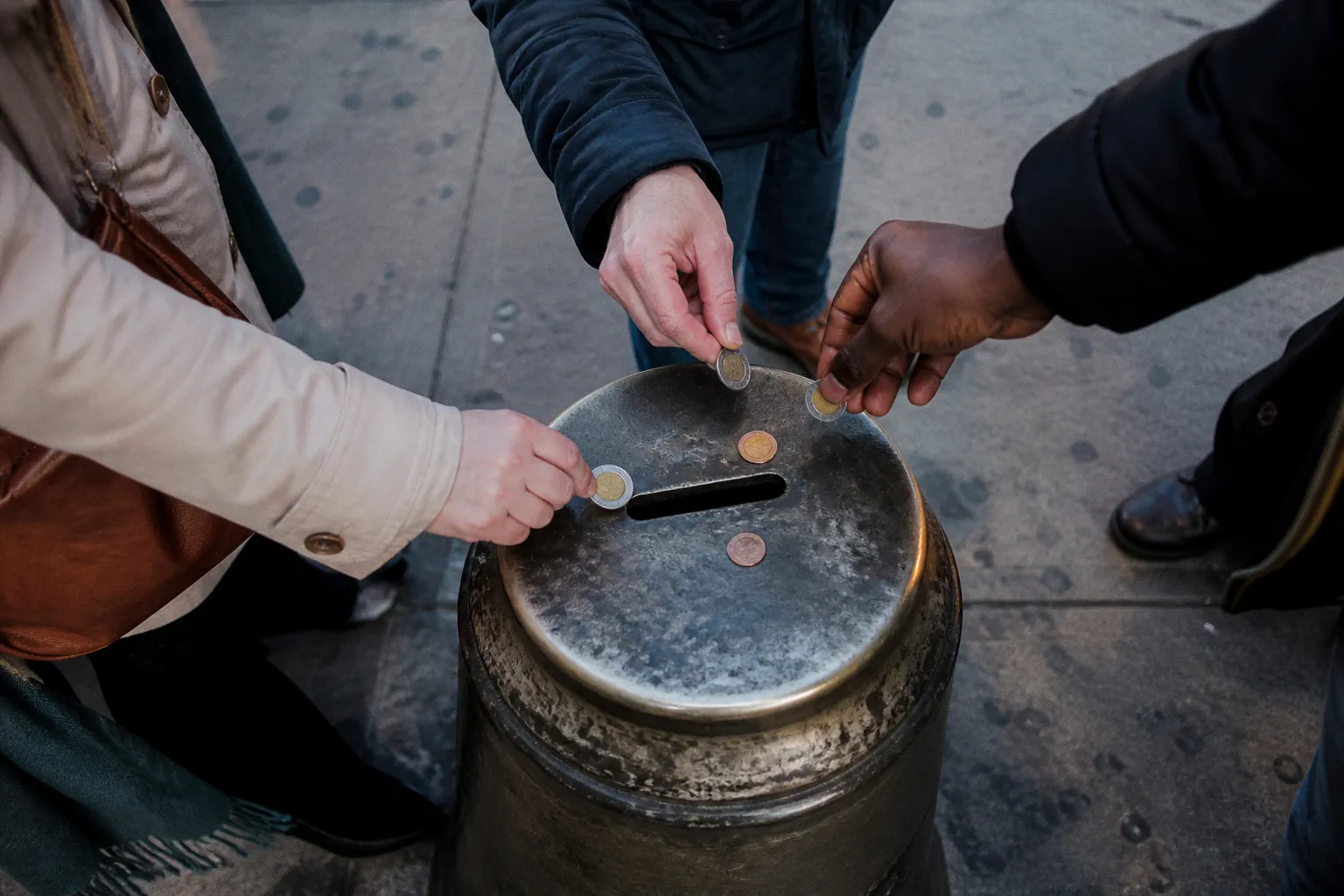
That distinction matters. A group of individual donors pooling modest contributions and voting on neighborhood grants is not the same animal as a fund assembled by foundations, corporations, and high-net-worth donors under expert management. Both belong to the broad family of collective giving. They do not share the same governance, pace, contribution threshold, or relationship with nonprofit grantees.
Compare car rental deals in United Kingdom
See available offersPartner link — DiscoverCars comparisonThe debate around NYC donor collaboratives vs giving circles is therefore not a branding exercise. It is a choice between two funding paths: participatory philanthropy, where members learn and decide together, and coordinated grantmaking, where pooled capital is directed through a more formal strategy. One is not automatically more democratic, effective, or enlightened. Philanthropy has enough boardroom theater already. The structure determines who gets heard, who carries the administrative burden, and who gets to call a grant “strategic.”
The mechanics of democratic giving circles: peer-led philanthropy in NYC
A giving circle is a collective giving group built around individual members. They contribute money, discuss community needs, review potential recipients, and decide together where the pooled funds go. The group may manage itself or operate with support from a host organization, but the defining feature is member participation.
The model is deliberately accessible. Research from Philanthropy Together and the U.S. Collective Giving Research Initiative found that individual giving-circle donations average around $1,000. That is not a trivial commitment, but it is also a different universe from the contribution expectations often associated with institutional funds or major donor collaboratives.
Giving circles have grown sharply in the United States. Between 2016 and 2023, their number tripled to approximately 4,000, with about 370,000 members distributing $3.1 billion over that seven-year period. Those figures describe the national landscape, not New York City alone. Still, they show why the format has become more than a pleasant dinner-party concept for people with philanthropic aspirations and a shared calendar.
The appeal is straightforward:
- Members pool resources, allowing individual donors to support grants larger or more meaningful than their solo contributions might permit.
- Members share decision-making, rather than simply signing off on a recommendation prepared somewhere else.
- Members build local knowledge, often through nonprofit presentations, site visits, community conversations, and direct engagement with the issues being funded.
- Members gain a network, which can become as influential as the grants themselves.
- Emerging organizations may receive attention, particularly when the circle is willing to fund smaller or less established local groups.
The costs are just as real. Democratic decision-making takes time. Members must absorb unfamiliar information, navigate disagreement, and resist the temptation to confuse a compelling presentation with organizational capacity. A giving circle can become more participatory than strategic, or more social than accountable. The room may be full of good intentions while the grant process remains vague.
That is where governance either saves the model or turns it into philanthropic karaoke.
New York examples: local circles with distinct mandates
New York City has several giving circles with different constituencies and priorities. ALLINBKLYN is a women’s giving initiative focused on Brooklyn nonprofits. The Asian Women Giving Circle directs attention toward organizations and projects connected to Asian women and girls. WellMet Philanthropy focuses on catalyst grants for emerging local nonprofits.
These examples demonstrate why “giving circle” is not a sufficient description by itself. A circle’s identity is shaped by its membership, geography, grant size, issue focus, host arrangement, and tolerance for risk. Two circles can use the same label while operating with entirely different expectations.
WellMet’s focus on catalyst grants, for example, points toward early-stage or emerging local work. That kind of funding can be useful precisely because larger institutions often want a longer track record, more polished financial systems, and evidence that the organization has already survived the first round of institutional suspicion. A small circle may be willing to back a group before it has acquired the paperwork equivalent of body armor.
But early funding also demands sharper judgment. Emerging nonprofits may have strong community credibility without mature infrastructure. A giving circle that funds them needs to understand the difference between “not yet bureaucratic” and “not yet able to manage a grant.” Those are not synonyms, despite what some philanthropy decks suggest.
A giving circle is democratic by design, but democracy does not eliminate the need for due diligence. It merely spreads the responsibility around the room.
Institutional strategy: how donor collaboratives aggregate capital
Donor collaboratives and collaborative funds operate on a different plane. They bring together foundations, family funds, corporations, and major individual donors around a defined initiative or local challenge. The capital is typically larger, the governance more formal, and the grantmaking more likely to be guided by professional staff, external experts, or a designated managing institution.
The New York Community Trust hosts and facilitates both models. On the collaborative side, it supports funds that aggregate major foundations and corporate partners, including the NYC Workforce Funder Collaborative. On the giving-circle side, it is associated with structures such as WellMet Philanthropy. That coexistence is useful because it makes the distinction visible: collective giving is not one format with different logos. It is an ecosystem of arrangements.
A donor collaborative exists because coordination is itself part of the intervention. A fund may be designed to address workforce development, housing, public health, education, climate resilience, or another challenge that no single donor can solve through isolated grants. The collaborative can align capital, research, grant timelines, and institutional relationships.
The operating logic usually includes several elements:
1. A shared problem definition. Participating funders agree that a particular challenge deserves coordinated attention.
2. A pooled or aligned capital structure. Money may be combined in a common fund or coordinated around a shared strategy.
3. A managing institution or expert team. Someone has to conduct diligence, source grantees, manage reporting, and keep the strategy from dissolving into a committee memo.
4. A grantmaking framework. Applicants and grantees are assessed against agreed priorities, often with a stronger emphasis on scale, systems change, or measurable outcomes.
5. Institutional accountability. Decisions may need to satisfy several funders, each with its own governance requirements and appetite for risk.
The advantage is capacity. A professionally managed collaborative can fund larger initiatives, coordinate across multiple funders, and support work that requires sustained attention rather than one-off enthusiasm. It may also reduce duplication. New York nonprofits do not benefit when six funders separately commission six versions of the same landscape scan, then congratulate themselves for discovering that the problem is complex.
The tradeoff is distance. When decisions are made through experts and institutional representatives, community participation can become consultative rather than decisive. A nonprofit may be invited to provide input, but the final strategy may still be shaped by funders who will never operate under the conditions they are funding.
That does not make expert-guided philanthropy inherently illegitimate. It does mean the structure should be described honestly. A collaborative fund may be coordinated, informed, and financially substantial without being participatory in the same sense as a giving circle.
NYC donor collaboratives vs giving circles: the comparison that actually matters
The cleanest way to compare the two models is to look beyond their shared language of “collective impact.” That phrase has been stretched so thin it could now cover a folding table.
| Dimension | Giving circles | Donor collaboratives and collaborative funds |
|---|---|---|
| Core participants | Individual donors, often contributing at accessible levels | Foundations, corporations, family funds, and high-net-worth individuals |
| Decision-making | Member-driven, democratic, or member-managed | Expert-guided, institutionally managed, or governed by participating funders |
| Typical contribution pattern | Individual contributions pooled into a common giving process; average member donation around $1,000 | Larger institutional or major-donor commitments, with thresholds varying by fund |
| Grantmaking style | Often relationship-based, participatory, and locally focused | More strategic, coordinated, and aligned to a defined issue or system |
| Administrative capacity | May be volunteer-led or supported by a host organization | Usually includes professional grantmaking and fund-management capacity |
| Main strength | Broad participation and direct member learning | Scale, coordination, specialized expertise, and sustained strategy |
| Main vulnerability | Slow consensus, uneven diligence, and overreliance on volunteer labor | Donor dominance, distance from communities, and institutional groupthink |
| Best fit | Donors seeking shared learning and direct influence over grants | Funders seeking coordinated action on complex regional challenges |
The difference is not merely who writes the check. It is who sets the agenda.
In a giving circle, the donor is usually also a participant in the learning process. Members may debate which organizations deserve support, ask questions directly, and revise their assumptions as they encounter community-led work. That can produce a more grounded form of philanthropy, provided the circle does not treat personal familiarity as a substitute for evidence.
In a donor collaborative, the donor is more often a capital partner in a managed strategy. The arrangement can be less intimate and more operationally capable. Funders may have limited direct contact with grantees, but the collaborative may be able to support multi-year work, coordinate technical assistance, or engage with policy and systems that are beyond the reach of a small member-led group.
The wrong question is, “Which model has more impact?” Impact is not a property of the label. It depends on the quality of the strategy, the competence of the managers, the honesty of the reporting, and whether the funders understand what nonprofit organizations actually need.
The better question is, “What kind of participation and accountability does this funding problem require?”
Participation, power, and the danger of decorative input
Participatory grantmaking in New York is often discussed as a corrective to traditional philanthropy. The critique is justified. For decades, many funding decisions were made by people with money, professional status, and a remarkable ability to describe communities without granting them meaningful authority.
Giving circles can shift that balance. Members may come from the communities connected to the funding focus. They may bring lived knowledge, cultural competence, and relationships that a conventional review panel lacks. Even when members are not themselves community representatives, the circle’s format can make donor assumptions visible and contestable.
But “participation” can also become a decorative word. A circle may invite community input without allowing that input to determine allocations. A collaborative may conduct listening sessions and publish a thoughtful summary, then return to the original strategy unchanged. The microphone is not the same thing as the vote.
The governance questions are blunt:
- Who has final authority over grants?
- Who defines the problem before proposals are invited?
- Who decides what counts as evidence?
- Can grantees challenge the funder’s assumptions without risking future support?
- Are community members compensated for their expertise?
- Does the process account for the time required from small nonprofit teams?
- Are unsuccessful applicants told why they were declined?
- Can the funding structure adapt when the original theory proves wrong?
A circle that gives every member an equal vote may still reproduce inequality if only the most confident members dominate discussion. A collaborative with professional staff may still be accountable if it shares decision power, publishes clear criteria, and treats grantees as partners rather than data sources. The mechanics matter more than the self-description.
This is where the New York philanthropic ecosystem tends to produce its most expensive contradiction: everyone wants community-informed work, but few institutions want the slower, messier governance required to let communities actually influence money.
The test of participatory philanthropy is not whether people were invited into the room. It is whether the money moved differently because they were there.
Local impact and the 84% question
Giving circles are often treated as small-scale philanthropy, but small-scale does not mean geographically irrelevant. Research cited in the collective giving field indicates that 84% of giving-circle grants go to local entities. That figure is national, not NYC-specific, and it should not be presented as a borough-by-borough map of New York giving. It does, however, challenge the lazy assumption that giving circles are mainly vehicles for national causes or distant emergencies.
For New York nonprofits, local giving circles can offer several practical benefits.
First, they may be more reachable than large institutional funders. A small organization that lacks a full development department may still be able to explain its work to a circle of members who understand the neighborhood, the cultural context, or the problem from close range.
Second, circles can provide relational capital. Members may connect grantees to other donors, volunteers, board prospects, or community networks. That support is not a replacement for unrestricted funding, but it can expand a nonprofit’s operating field.
Third, circles may be more comfortable with catalyst grants and emerging organizations. A modest grant can help a nonprofit test a program, stabilize a new initiative, or build the evidence needed for a larger funder later. The danger is that donors begin to treat small grants as a substitute for long-term support. A $10,000 gesture does not pay a recurring salary forever, no matter how moving the award ceremony is.
Collaboratives, meanwhile, can bring a different kind of local leverage. A coordinated fund may support multiple organizations working on related problems, align grantmaking with workforce or public-sector systems, and provide a level of capital that individual members cannot assemble. The NYC Workforce Funder Collaborative illustrates the institutional approach: multiple funders organizing around a shared local concern rather than scattering money across unrelated projects.
Yet scale introduces its own hazards. A large collaborative can impose reporting requirements that are manageable for a major nonprofit and punishing for a small one. It can privilege organizations that already speak fluent funder, maintain polished dashboards, and employ someone whose job is to translate community work into strategic language.
For funders, the local question is not only where grants go. It is who can realistically compete for them.
Navigating New York’s collective giving landscape
Choosing between a giving circle and a donor collaborative starts with the donor’s actual objective, not the most attractive language in the fund brochure.
A person seeking a hands-on entry into philanthropy may find a giving circle more suitable. The member learns how local nonprofits operate, participates in decisions, and sees the tradeoffs behind grantmaking. This is not philanthropy as passive consumption. It requires time, patience, and a tolerance for disagreement.
A foundation or corporate funder trying to coordinate capital around a systemic issue may need a collaborative. The value lies less in the individual donor experience and more in alignment, research, grant administration, and the ability to sustain a shared initiative.
The following distinctions help clarify the route:
1. Choose a giving circle when participation is part of the purpose. If the goal includes donor education, shared judgment, community connection, and member-level decision-making, a circle offers the right mechanics.
2. Choose a collaborative when fragmentation is the problem. If multiple funders are independently approaching the same issue, a coordinated structure can reduce duplication and create a more coherent grantmaking strategy.
3. Examine the decision rights, not the mission statement. Ask whether members, community representatives, staff, or participating institutions hold the final grant authority.
4. Match the funding horizon to the model. A circle may be well suited to catalyst grants and local relationship-building. A collaborative may be better equipped for sustained, multi-funder initiatives, assuming the commitments are actually durable.
5. Price in the administrative burden. Volunteer-led circles need governance and grantmaking support. Institutional collaboratives need enough staff capacity to prevent coordination from becoming another layer of bureaucracy.
6. Look at the grantee experience. A fund that calls itself flexible but requires lengthy applications, elaborate metrics, and repeated unpaid strategy sessions is not flexible. It is simply outsourcing its labor.
7. Test the appetite for risk. Emerging local nonprofits may need a donor willing to fund potential rather than only proven scale. Established collaborative funds may bring more capital but also more institutional caution.
For nonprofits deciding where to invest relationship time, the same logic applies. A giving circle may offer direct access to members and a shorter path to a decision, but the grant may be smaller and the process more dependent on volunteer availability. A collaborative may provide a larger opportunity and more structured support, but the competition can be tougher and the application process more formal.
Neither route guarantees unrestricted funding, multi-year support, or respectful partnership. Those must be examined directly. Philanthropic models do not come with moral warranties.
What leaders should ask before joining or funding
For donors and institutions considering membership in a collective giving structure, a few questions expose the operating reality quickly:
- Is the capital genuinely pooled, or are donors merely coordinating announcements while retaining separate control?
- How much time is required from members or participating funders?
- Who handles nonprofit due diligence and grant administration?
- What happens when members disagree?
- Are grantees involved in setting priorities, or only asked to validate them?
- Does the fund support general operating expenses, project grants, or both?
- How does it evaluate outcomes without forcing small nonprofits into vanity metrics?
- What is the exit plan when a collaborative initiative ends?
- Are administrative costs disclosed clearly?
- Can the structure change course without waiting for every donor to approve a new slogan?
These are not hostile questions. They are basic fire-safety checks. The sector has spent too long treating scrutiny as a sign of insufficient optimism.
The route is a governance choice, not a personality test
Giving circles and donor collaboratives serve different purposes within New York’s philanthropic infrastructure. Giving circles widen participation, pool individual contributions, and create a member-managed path into local grantmaking. Donor collaboratives aggregate institutional and major-donor capital, usually under expert or organizational leadership, to pursue coordinated responses to complex challenges.
The national growth of giving circles—approximately 4,000 groups and 370,000 members by 2023, with $3.1 billion distributed over seven years—shows the appeal of participatory collective giving. The presence of New York examples such as ALLINBKLYN, Asian Women Giving Circle, and WellMet Philanthropy shows that the model has local forms and distinct priorities. Collaborative funds supported or facilitated by The New York Community Trust show the other side of the map: structured capital, institutional alignment, and issue-focused grantmaking.
For anyone weighing NYC donor collaboratives vs giving circles, the answer should follow the work. Choose the circle when shared decision-making and local learning are central. Choose the collaborative when coordination, scale, and specialized grantmaking capacity are the actual need.
The harsh reality is that neither model can rescue weak governance. A giving circle can become a social club with a grant budget. A donor collaborative can become a committee with a logo, a consultant, and no clear owner of the outcome. The funding vehicle matters, but the discipline behind it matters more.
Leadership should stop asking which model sounds more progressive and ask the less flattering question: who has power, who does the labor, and whether the nonprofits receiving the money are better off because the funders coordinated at all.