IRS lobbying tests for NYC charities: H-election vs default
Most New York City charities that lobby do not actually know what the law allows them to lobby about. They think they are operating inside a rule. In practice, many are operating inside a fog.
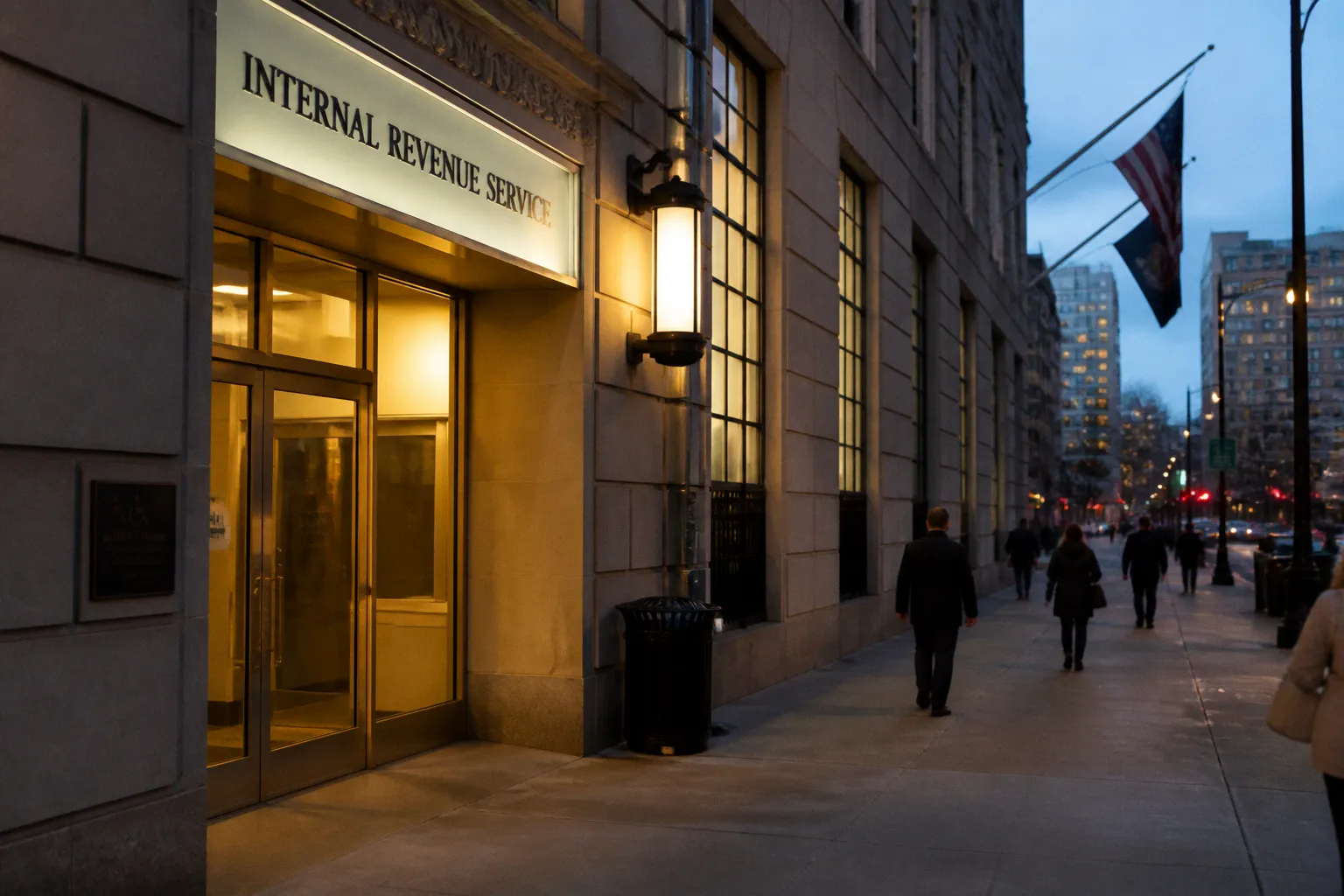
IRS Lobbying Tests for NYC Charities: H-Election vs. Default
The federal restriction on lobbying by 501(c)(3) organizations has been on the books since 1934, when the Revenue Act added language that became Section 501(c)(3)'s lobbying prohibition. Yet the IRS has never drawn a hard statutory line around the word “substantial.” That is not a drafting detail a nonprofit can safely ignore. It is the central problem created by the default test—and the reason Congress later created the 501(h) election.
Compare car rental deals in United Kingdom
See available offersPartner link — DiscoverCars comparisonIf a board lets program staff “advocate” without tracking what that advocacy costs in staff time, consultant fees, travel, communications, and events, it has built an avoidable compliance problem into its Form 990. The question is not whether the organization is allowed to care about public policy. It is whether the organization can distinguish lobbying from related activities, measure the resources devoted to it, and defend that measurement when someone asks.
The choice between the default test and the 501(h) expenditure test is one of the few governance decisions where administrative clarity matters as much as legal theory. Neither option turns a charity into a political organization. But one gives the board a defined accounting framework. The other leaves the organization to a facts-and-circumstances analysis with no clear statutory percentage threshold.
The Insubstantial Part Test: A Definition That Isn't One
The default rule is deceptively simple to state: no substantial part of a public charity's activities may consist of attempting to influence legislation. That is Section 501(c)(3)'s basic restriction, stripped of the legalese. The trouble is the word “substantial.”
The statute does not provide a fixed percentage of a charity's budget, staff time, or overall activity that automatically qualifies as substantial or insubstantial. The IRS evaluates the organization's lobbying in context, looking at the nature and extent of its activities and resources. In other words, the default test has no clear statutory percentage threshold; it is evaluated under the facts and circumstances of the organization's operations.
That is a narrower point than saying the IRS has unlimited power to revisit an organization's history. It does not mean there is no statute of limitations or that an examiner can frame activity however they want forever. It does mean that a charity cannot point to a statutory “safe” percentage and end the analysis. The organization has to show what it did, what it spent, how often it did it, and how that work related to its overall exempt-purpose activities.
The closest anyone has to a commonly cited number comes from Seasongood v. Commissioner (1955), where the Sixth Circuit suggested that spending up to 5% of an organization's total activities on lobbying might be considered insubstantial. “Might” is doing the work in that sentence. The case did not create a binding nationwide threshold, and no subsequent IRS regulation adopted the 5% figure as a universal rule. It remains a judicial data point that practitioners cite because the default framework offers so few usable numbers.
That distinction matters in New York City, where policy work is often woven into direct services. A housing nonprofit may testify about shelter funding. A legal-services organization may comment on legislation affecting its clients. A health charity may ask elected officials to support a bill. Some of those activities may be lobbying; some may fall within exceptions for nonpartisan analysis, technical assistance, self-defense, or communications about an organization's own programs. The label the staff uses internally—“advocacy,” “education,” or “community engagement”—does not decide the tax treatment.
What the IRS may consider under the default test includes far more than checks written to a lobbying firm. Depending on the activity, the organization may need to account for:
- Staff compensation and benefits attributable to legislative work.
- Consultant and coalition fees.
- Travel to legislative meetings, hearings, and advocacy events.
- Printing, digital communications, advertising, and campaign materials.
- The organization's share of overhead connected to the lobbying activity.
- Time spent preparing testimony, drafting legislative language, or coordinating a lobbying campaign.
- Volunteer and board involvement when the organization is trying to influence legislation.
Volunteer time is particularly difficult for a membership-based or grassroots organization. A charity that mobilizes volunteers to contact council members about a specific bill may have no payroll expense associated with those calls, but that does not automatically make the activity irrelevant. The organization still needs to understand what the campaign was intended to accomplish and how it fits into the overall picture.
The default rule does not measure lobbying with a clean percentage. It asks whether the organization's lobbying is substantial in the context of everything else it does.
The risk is not that every aggressive advocacy effort automatically destroys exempt status. The risk is that the board may not know how an examiner will view the total pattern. A one-time submission of technical comments is different from a year-long campaign built around repeated public calls to influence a legislative vote. A small amount of direct lobbying may look different in an organization whose principal activity is policy work than in a large direct-service charity with occasional legislative engagement.
The default test also creates a governance problem. If the organization does not track lobbying as it happens, it may later be forced to reconstruct activity from calendars, email, invoices, grant budgets, and staff memory. By that point, the accounting question has become a credibility question. The board is no longer asking, “What did we spend on lobbying?” It is asking, “Can we prove what we did?”
The 501(h) Expenditure Test: A Real Rule With Real Numbers
Congress created the 501(h) election in 1976 in part to give eligible public charities a more objective alternative. An organization files IRS Form 5768, elects the expenditure test, and uses a sliding scale based on exempt-purpose expenditures.
The election is not available to every 501(c)(3). Churches, integrated auxiliaries, and private foundations generally cannot use it. Most other public charities, including most NYC operating nonprofits, can make the election with a one-time filing. It remains in effect until the organization revokes it. There is no annual renewal simply to keep the election active.
Once the election is in place, the organization calculates its lobbying ceiling using its exempt-purpose expenditures. The statutory scale is commonly summarized as follows:
| Exempt-Purpose Expenditures | Permitted Lobbying Limit |
|---|---|
| First $500,000 | 20%, or up to $100,000 |
| Next $500,000, up to $1 million | 15%, or up to $75,000 |
| Next $500,000, up to $1.5 million | 10%, or up to $50,000 |
| Amount above $1.5 million, up to $17 million | 5% |
| Amount above $17 million | Capped at $1 million |
A charity with $3 million in annual exempt-purpose expenditures would calculate its permitted lobbying amount by applying each tier to the relevant portion of its expenditures: $100,000 on the first $500,000, $75,000 on the next $500,000, $50,000 on the next $500,000, and 5% on the remaining $1.5 million. That produces a $300,000 lobbying ceiling.
The value of the election is not simply that the number may be generous. It is that the organization can plan around a defined method. The finance department can create a lobbying account. Program staff can code invoices and time. The board can review a budget before a campaign begins rather than trying to determine afterward whether a campaign felt “substantial.”
The H-election also changes how volunteer activity is treated for the federal expenditure calculation. Volunteer hours generally are not counted as lobbying expenditures because no compensation is paid for them. That is a significant difference for organizations whose policy work depends on members, tenants, patients, parents, or neighborhood volunteers.
The election does not make every advocacy activity count as lobbying, and it does not remove the need to classify communications carefully. It simply gives the organization an expenditure-based framework once an activity falls within the lobbying rules.
There is a commitment involved. The organization cannot elect the 501(h) test for one set of activities and use the default test for another set during the same tax year. The election applies to the organization's lobbying analysis as a whole. If the organization revokes the election, it generally cannot simply re-elect it for five years without IRS approval. That makes the decision more consequential than a seasonal setting in a finance spreadsheet.
What the H-Election Does—and Does Not—Protect
A 501(h) election is not a license to lobby without limit. The organization still has to:
1. Identify which communications and activities are lobbying.
2. Separate direct lobbying from grassroots lobbying.
3. Track expenditures using a reasonable allocation method.
4. Report the relevant information on Form 990 and its schedules.
5. Monitor both the overall lobbying limit and the grassroots limit.
6. Watch for state and city registration requirements that operate independently of federal tax law.
The election also does not protect a charity from the separate prohibition on political campaign intervention. Supporting or opposing candidates for public office is not the same thing as lobbying about legislation. A charity can be within its 501(h) limit and still violate the campaign-intervention prohibition if it endorses a candidate, coordinates prohibited activity, or uses charitable resources for campaign purposes.
That separation should be explicit in board training. “We are allowed to lobby” is not the same statement as “we are allowed to engage in partisan politics.” The first can be true under a properly managed 501(h) election. The second is not a permission the election creates.
Grassroots vs. Direct: The 25% Rule Inside the H-Election
The H-election contains a second calculation. Within the organization's permitted lobbying amount, no more than 25% may be used for grassroots lobbying. The rest can be used for direct lobbying, subject to the overall limit.
Direct lobbying generally involves communicating with legislators, legislative staff, or other government officials about specific legislation. Testifying at a hearing, meeting with a council member about a bill, submitting comments on proposed legislation, and asking an official to support or oppose a measure can all fall into this category.
Grassroots lobbying is different. It involves urging the general public to contact legislators or otherwise influence the legislative process. A campaign does not stop being grassroots because the organization provides the message and supporters send it themselves. A tweet, email, text alert, mailer, town hall, or online action page can all create grassroots lobbying expenditures when they include a call to action about specific legislation.
The distinction is often blurred in coalition work. A charity may produce a policy report, hold a public briefing, and then encourage attendees to contact their representatives. The report and briefing may involve several activities, some of which are outside the lobbying definition. The call to contact legislators is the part that requires closer classification and allocation.
The default test has no separate grassroots sub-cap. That can sound easier, but it does not solve the underlying problem. The organization still has to determine whether its total lobbying is insubstantial under the facts and circumstances, and it still lacks a statutory percentage threshold against which to measure a grassroots-heavy campaign.
| Parameter | Default Insubstantial-Part Test | 501(h) Election |
|---|---|---|
| Measurement basis | Facts and circumstances, including the overall pattern of activities | Expenditures under a statutory sliding scale |
| Statutory percentage threshold | None | Defined expenditure limits |
| Volunteer hours | May be relevant to the overall activity analysis | Generally not counted as lobbying expenditures |
| Grassroots sub-cap | No separate statutory sub-cap | 25% of the permitted lobbying amount |
| Recordkeeping | Must support the facts-and-circumstances analysis | Must support expenditure allocations and limits |
| Excess lobbying consequence | Loss of exemption is possible if lobbying is substantial | Excise-tax and exemption rules apply under the 501(h) framework |
| Planning clarity | Limited | Higher, provided the organization tracks spending correctly |
The practical advice is less dramatic than “the H-election is mandatory,” but it is usually more useful: if a charity intends to conduct sustained advocacy, it should evaluate whether the expenditure test gives its board and finance team a better operating framework. The election is particularly worth considering when the organization relies on staff campaigns, paid communications, consultants, or a high volume of direct legislative work.
A charity that files Form 5768 still has to report lobbying expenditures on its Form 990. If it exceeds the applicable limits, it may face excise-tax consequences and, in some circumstances, jeopardize its exemption. The reporting is not lighter under the election. It is more structured. The organization knows which numbers it is trying to manage and can identify the source of an overage before the filing deadline.
NYC and Albany Thresholds: Federal Rules Are Only Half the Picture
A charity can be well within its federal 501(h) limits and still have a New York State or New York City lobbying registration obligation. The systems overlap in subject matter but do not use the same definitions, forms, thresholds, or calendars.
New York State's Commission on Ethics and Lobbying in Government, commonly known as COELIG, requires registration when an organization's lobbying compensation and expenses reach the applicable threshold during the calendar year. The commonly used $5,000 threshold is low enough that a small charity can reach it without thinking of itself as a professional lobbying organization.
The calculation may include more than payments to an outside lobbyist. Staff compensation allocated to lobbying, consultant retainers, travel, communications, and other directed expenses can all matter. A nonprofit should not wait until it has paid a lobbying firm to ask whether it has crossed the line.
New York City has a parallel regime administered through the City Clerk's Lobbying Bureau. When lobbying is directed at city officials and the applicable threshold is reached, the organization may need to register and file city disclosures as well. Registration with the state does not automatically satisfy the city requirement, and city registration does not eliminate the state filing.
That is where the “we're just a small charity” defense breaks down. A single executive director who spends a meaningful portion of the year meeting with city officials, testifying at hearings, and coordinating a legislative campaign can generate a registration issue even if the organization has no government-relations department. Calling the work “part of the job” does not make the associated compensation disappear.
The federal, state, and city systems should therefore be tracked separately:
- Federal tax compliance: whether the organization uses the default test or has made the 501(h) election, and whether it remains within the applicable limits.
- New York State lobbying compliance: whether state-level lobbying compensation and expenses reach the registration threshold and what periodic disclosures follow.
- New York City lobbying compliance: whether activity directed at city officials reaches the city threshold and triggers a separate registration or filing calendar.
- Procurement-related activity: whether work involving government contracts falls within a separate procurement-lobbying regime.
A charity may be comfortably within its federal limit while owing two registrations. The reverse is also possible: a charity may have a state or city reporting obligation even though its federal lobbying is modest. The legal systems are asking different questions.
Build One Activity Record, Not Three Separate Stories
Small organizations do not need three separate bureaucracies to begin tracking this. They do need one reliable activity record that can support the different systems.
For each significant advocacy effort, record:
- The bill, proposed rule, budget item, contract, or other government matter involved.
- The officials or legislative bodies contacted.
- Whether the communication asked for action on specific legislation.
- Whether the organization urged members of the public to contact officials.
- The staff, consultant, vendor, and travel costs associated with the work.
- The dates and duration of the activity.
- The portion of the work that was education, research, service delivery, or non-lobbying communication.
- The state and city jurisdictions involved.
This is not paperwork for its own sake. It is how the organization avoids using a single vague category—“advocacy”—for activities that have different tax and lobbying consequences.
Compliance Costs in 2026: Albany's Quiet Squeeze
The cost of lobbying compliance is not limited to the federal election form or the time spent preparing a Form 990. For a New York charity, the state and city systems create recurring registration, disclosure, training, and recordkeeping obligations.
The 2026 New York Executive Budget did not change the basic threshold structure described above, but it kept attention on the cost of remaining in the system. The state lobbyist registration fee is a flat $250 per year. That may be manageable for a large organization, but it is not trivial for a small nonprofit with a narrow operating margin and a volunteer-led policy program.
Procurement lobbying creates a separate concern. The existing $50,000 threshold for triggering procurement-lobbying registration remains in place through July 31, 2028. A charity that works near government contracts, purchasing decisions, or public procurement should not assume that its ordinary legislative registration covers this activity. Procurement-related communications need their own review.
Training is another compliance cost that is easy to miss because the course itself is not the expensive part. Beginning in the 2027–2028 biennial period, COELIG's mandatory lobbying training requirement carries a $25-per-day penalty for a registrant who fails to complete the training. The penalty can accrue until the requirement is satisfied.
For a small advocacy organization, the exposure comes from multiplying a modest daily amount across several people and several weeks. A team of five registrants who remain out of compliance for 60 days would face $7,500 in accumulated penalties. The calculation is straightforward; the operational lesson is less so. Training needs to be assigned, calendared, documented, and checked when staff or consultants change.
| Compliance Cost or Trigger | 2026 Position |
|---|---|
| New York State lobbyist registration fee | $250 flat annual fee |
| New York City lobbying registration | Separate city obligation when the applicable threshold is reached |
| State and city activity threshold | Commonly associated with the $5,000 lobbying threshold, subject to the applicable rules |
| Procurement lobbying threshold | $50,000, extended through July 31, 2028 |
| Biennial training penalty | $25 per day beginning in the 2027–2028 biennial period |
| Federal 501(h) ceiling | Calculated through the sliding scale, with a $1 million cap at the top end |
The better approach is to treat compliance as part of the campaign budget. If a coalition campaign requires staff time, paid media, consultants, travel, state registration, city registration, training, and outside review, those costs belong in the same planning conversation as the policy goal. A campaign that fits inside the federal number may still be too administratively expensive for the organization to run casually.
Pick a lane, but define the lane accurately: federal tax limits, state registration, and city registration are separate questions.
The choice between the insubstantial-part test and the 501(h) election is not a tax technicality. It is a decision about how the organization intends to govern policy work.
Staying with the default test is not automatically reckless. It may be reasonable for a charity whose lobbying is genuinely occasional and whose staff can document the limited scope of that activity. But the organization should understand what it is choosing: a facts-and-circumstances analysis with no clear statutory percentage threshold, not a hidden 5% safe harbor.
Electing 501(h) is not automatically the right answer either. It requires disciplined expenditure tracking, attention to the grassroots sub-cap, and a willingness to treat advocacy as a measurable program cost. It does not eliminate the need to distinguish lobbying from political campaign intervention, and it does not replace New York State or New York City registration analysis.
What it does provide is a framework a board can actually use. The finance team can code expenses. Program staff can identify the activities that need review. The board can see whether a proposed campaign fits within the organization's limits before the campaign begins. That is a substantial improvement over reconstructing the meaning of “substantial” after a controversy, an audit, or an unexpectedly successful advocacy effort.
For an NYC charity, the practical sequence is clear:
1. Decide whether the organization's policy work is occasional or central to its mission.
2. Review whether the organization is eligible to make the 501(h) election.
3. Establish a written method for classifying and allocating lobbying expenditures.
4. Track direct and grassroots lobbying separately.
5. Review state and city thresholds before the organization reaches them.
6. Assign training and filing responsibilities to named people, not to “the team.”
7. Revisit the analysis when the organization adds a campaign, hires a consultant, joins a coalition, or begins working on procurement matters.
The middle ground is not meaningful advocacy itself. The problem is meaningful advocacy with no measurement, no registration review, and no clear explanation of which federal test the organization is using. That is where a manageable policy program becomes a compliance problem.
If advocacy is core to the mission, the board should choose a framework deliberately, build the budget around it, and maintain the records that make the choice defensible. If advocacy is incidental, the organization should keep it incidental in both substance and documentation. Either way, “we thought it was just advocacy” is not a compliance system.