NYC immigrant directories: which database is most accurate?
If you are trying to find an immigration lawyer, English class, employment program, case manager, or neighborhood-based community organization in New York City, the short answer is that no single NYC…
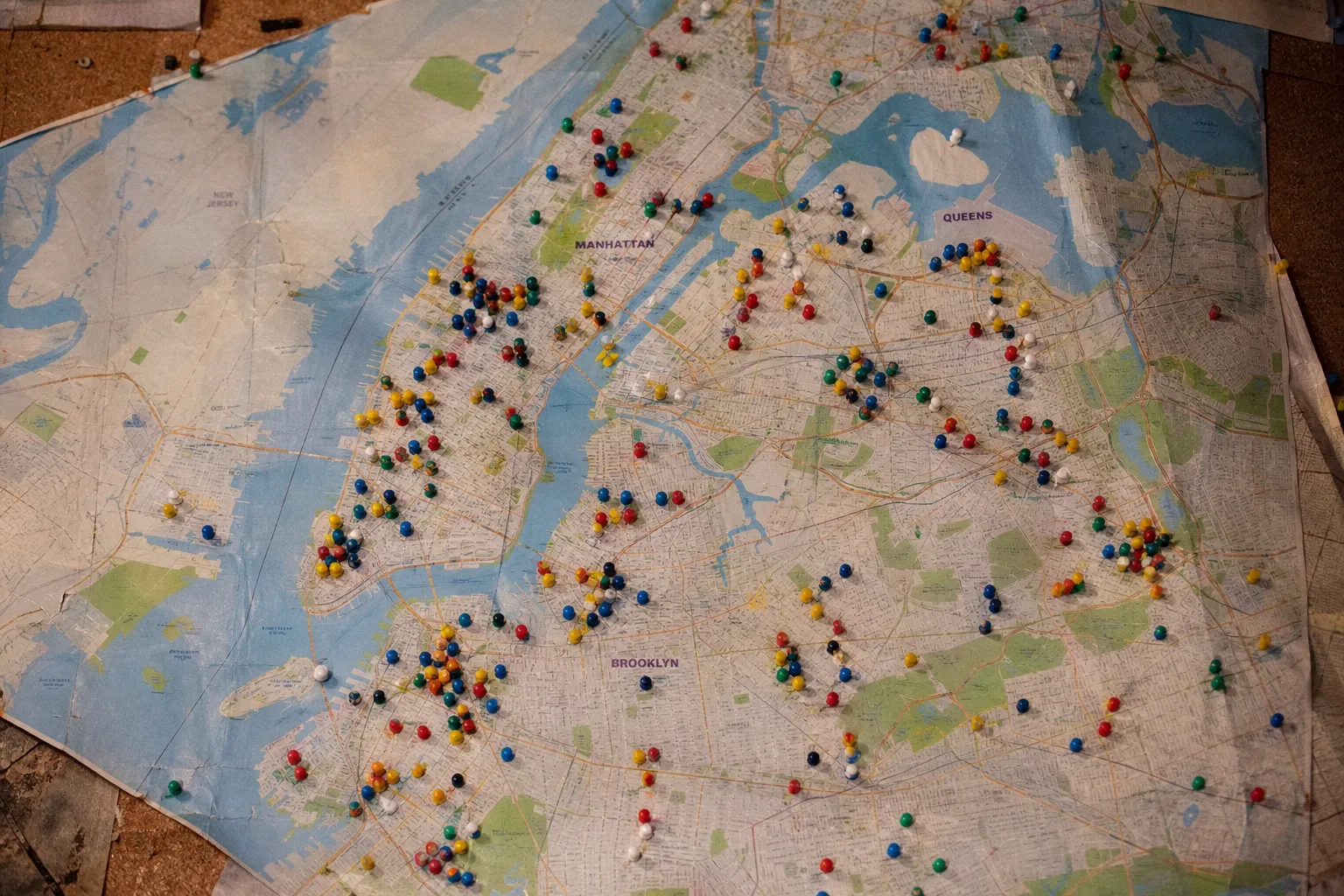
If you are trying to find an immigration lawyer, English class, employment program, case manager, or neighborhood-based community organization in New York City, the short answer is that no single NYC immigrant services directory search tool is reliably best for every purpose. The most dependable starting points are usually the Mayor’s Office of Immigrant Affairs (MOIA) directories for broad city services and the National Immigration Legal Services Directory for free or low-cost immigration legal help.
That distinction matters because New York’s immigrant-service ecosystem changes faster than most public databases can. Organizations adjust their intake rules, relocate offices, pause programs, change languages, exhaust grant funding, or narrow eligibility long before every directory record reflects the change. I treat directories as navigation instruments rather than final authorities: they help identify a plausible route, but a phone call or current intake confirmation is still part of the route.
The most accurate directory is not the one with the longest list; it is the one whose scope matches the help you need and whose listing you can confirm today.
Why “the most accurate database” is the wrong starting point
A directory can be accurate in one sense and still be unhelpful in another. A listing may correctly identify an organization as a nonprofit provider of immigration legal services, for example, while saying little about whether that organization is accepting new cases, serves people in your borough, handles your type of immigration matter, or offers interpretation in the language you need.
The same problem appears across the broader New York immigrant resource directory landscape. A community organization may provide food assistance, referrals, tenant support, education, and case management, but not legal representation. A legal provider may offer consultations but lack capacity for full representation. An English class may be open to anyone, while an employment program may have age, documentation, or residency requirements.
When I help community stakeholders work through this landscape, I begin with the service question rather than the database question:
- Do you need legal advice, representation, or only a referral?
- Are you looking for a citywide provider or something within a practical travel distance?
- Is language access essential?
- Do you need help with an urgent deadline, a benefits application, housing, employment, education, or family support?
- Are you searching for an organization that can serve a particular immigration status or type of case?
- Can the person seeking help safely communicate by phone, or is in-person support necessary?
These questions reduce what I would call directory friction: the time lost when a person contacts several organizations that were technically relevant but operationally unable to help.
Accuracy also has a geographic dimension. A national directory can be useful for locating a legal provider in New York City, but it may not tell you whether the provider’s office is easy to reach from a particular neighborhood or whether the organization has a local relationship that makes the referral workable. Conversely, a city directory may be better for finding a nearby service, but less useful for comparing organizations that specialize in a particular legal problem.
The point is not to find one universally superior database. It is to match the database to the decision that has to be made next.
MOIA’s specialized directories are the strongest broad starting point
In 2024, the NYC Mayor’s Office of Immigrant Affairs released four specialized resource directories rather than placing every service into one undifferentiated list:
1. Legal Services
2. Education and English Classes
3. Employment, Training, and Financial Empowerment
4. General Services, Case Management, and Referrals
That structure is useful because it reflects how people actually seek help. Someone looking for an English class should not have to sort through dozens of legal providers, and a person facing an immigration issue should not mistake a general referral organization for a legal representative.
MOIA’s directories are particularly valuable when the need is connected to city-funded or city-recognized services, neighborhood access, language availability, or an initial referral. They offer a practical map of the municipal service environment, including the types of organizations and assistance available across the five boroughs.
The city’s Immigrant Legal Services Community Support Network adds another important layer. Launched in July 2025, the network includes 38 neighborhood-based MOIA Immigration Legal Support Centers. These centers provide legal screenings and representation, making them more useful than a generic organization list when someone needs to understand whether a specific legal problem may be addressed through a nearby hub.
The key word is screening. A legal support center can help assess the situation and determine the appropriate next step, but the existence of a listing does not guarantee that every applicant will qualify for representation or that every case type will be accepted.
What MOIA directories do well
MOIA is often the best first stop when you need to:
- Locate immigrant-serving organizations by service category.
- Find legal, education, employment, or general referral support.
- Identify neighborhood-based legal assistance.
- Compare language access and contact options.
- Start with a city-level resource map rather than searching the open web.
- Connect to official city hotlines and programs.
MOIA also operates the Ask MOIA Immigration Legal Services Hotline at 1-800-354-0365, which can be useful when an online listing does not answer the practical question of where to begin. The hotline received 3,270 calls in 2024, a sign both of its reach and of the continuing need for guided navigation rather than passive access to a database.
Still, MOIA does not promise that every phone number, schedule, eligibility detail, or program description remains current at all times. The city’s directories include the kind of limitation that responsible public-service directories must acknowledge: the information can change, and users should confirm details directly with the organization.
For a resident, the directory is therefore most valuable as a first layer of sorting. It can narrow a large field of organizations into providers that appear to offer the right kind of assistance. It cannot determine, from the listing alone, whether the provider has an open intake slot this week, whether the person’s case falls within its current grant requirements, or whether a particular language is available at the first appointment.
For immigration legal services, use the National Immigration Legal Services Directory
If the need is specifically immigration law, I would usually move quickly from a general NYC immigrant community organization database to the National Immigration Legal Services Directory, a collaborative project of the Immigration Advocates Network and Scale Justice.
Its scope is narrower than MOIA’s, and that is precisely its strength. The directory lists nonprofit organizations that provide free or low-cost immigration legal services. It is not designed to be a complete atlas of every social-service provider in New York City. Instead, it helps users locate organizations whose core role includes immigration legal assistance.
That narrower scope can prevent a common and costly misunderstanding: contacting a respected community organization for a legal service it does not provide. A nonprofit may be deeply trusted in its neighborhood and still be unable to give legal advice or represent someone in immigration proceedings.
The National Immigration Legal Services Directory also uses a feedback model. Users can submit corrections through a feedback link at the bottom of an organization’s page, and the Immigration Advocates Network reviews those submissions before approval. This crowdsourced approach gives the directory a mechanism for correction that many static resource lists lack.
It does not make the directory perfect. I would not describe any listing as guaranteed current simply because it appears in a national database. But the combination of a focused legal-services scope, nonprofit eligibility, and a formal correction process makes it one of the most useful tools for finding low-cost immigration legal help.
MOIA versus the National Immigration Legal Services Directory
| Need | MOIA directories and legal support centers | National Immigration Legal Services Directory |
|---|---|---|
| General immigrant services | Strong starting point across legal, education, employment, and referrals | Not its primary purpose |
| Free or low-cost immigration legal help | Useful, especially for city-based and neighborhood support | Particularly focused on nonprofit legal providers |
| Neighborhood access | Strong, including 38 MOIA Immigration Legal Support Centers | Depends on the organizations listed |
| English classes and employment programs | Covered through specialized directories | Generally outside its scope |
| User corrections | Public information may be updated through municipal processes, but update timing varies | Users can submit corrections for review by IAN |
| Best use | Mapping the city’s wider immigrant-service ecosystem | Narrowing a search for nonprofit immigration legal assistance |
| Main limitation | Does not guarantee current capacity or representation quality | Does not cover the full range of social and community services |
The table is not a ranking. It is a routing guide. If someone asks, “Where can I find an immigration attorney or accredited legal provider?” I would begin with the National Immigration Legal Services Directory and then cross-check the result through MOIA. If the question is, “Where can I find an English class, employment support, or case management?” MOIA’s specialized directories are more appropriate.
A cross-check is especially useful when the stakes are high. If two directories identify the same provider, that does not prove that the organization is accepting new clients, but it gives you more confidence that you have found a real participant in the relevant service network. If only one directory contains the listing, that is not automatically a reason to discard it; it is simply a reason to verify the information more carefully.
A directory listing is not the same as available capacity
This is where online searches often fail people. A directory may tell you that an organization offers a particular service, but it may not show the conditions under which that service is currently available.
The practical difference between offers and accepts new clients can be substantial. Many nonprofit providers operate under restricted grants, seasonal enrollment periods, limited staff capacity, or specific program eligibility rules. A provider may have legal staff but only accept certain case types. Another may offer consultations but not representation. A third may serve a language group through scheduled appointments rather than walk-in hours.
When you contact an organization, I recommend asking a short set of direct questions instead of giving a long explanation before confirming that the program is a match:
1. Are you currently accepting new clients or participants?
This separates a live intake program from a directory description that may reflect a previous funding period.
2. Do you handle this type of matter?
Say whether the issue involves asylum, family petitions, work authorization, removal proceedings, citizenship, domestic violence-related immigration relief, or another specific concern.
3. Is the first consultation free, and are there later fees?
“Free or low-cost” can refer to different arrangements, so ask what the person may be expected to pay.
4. What documents should the person bring?
Some programs can begin with basic information; others need notices, prior applications, identification, or court paperwork.
5. What language support is available?
A language listed in a directory may mean staff availability, interpretation by appointment, or referral to another provider.
6. How long is the current wait?
A directory cannot reliably communicate the difference between an appointment next week and an intake queue lasting several months.
7. What is the safest and most reliable way to reach you?
Some organizations manage phone calls only during narrow intake windows, while others respond more consistently by email or through an online form.
For urgent matters, particularly where a notice or court date is involved, the date on the document should be treated as more important than the directory’s general description. A directory can identify a provider; it cannot extend a deadline.
The same principle applies outside legal services. An English class may be listed but already be full for the current term. An employment program may have shifted from open enrollment to referral-only intake. A case-management organization may still exist but have temporarily stopped accepting new households. These are not necessarily signs that the directory is careless. They are signs that service capacity is a moving part of the system that directory records rarely capture in real time.
The New York Immigration Coalition is valuable, but not a substitute for a public directory
The New York Immigration Coalition represents more than 200 immigrant and refugee rights groups across New York State. That makes NYIC an important part of the advocacy and service ecosystem, particularly for understanding the breadth of organizations working on immigrant and refugee rights.
However, I would not present NYIC as a standalone, searchable public directory of legal providers. NYIC directs users toward the National Immigration Legal Services Directory for that purpose. Its internal partner-information systems support coalition coordination, but that is different from maintaining a public database in which a user can search and verify current legal-service availability.
This distinction matters because institutional authority and directory function are not identical. An advocacy coalition may have deep relationships with community organizations and extensive knowledge of the field without operating a public-facing locator designed for individual intake.
NYIC also disclaims warranties regarding the accuracy, completeness, adequacy, or currency of information and linked resources on its website. That language should not be read as a criticism; it reflects the reality that nonprofit service information changes quickly and that organizations cannot control every external listing or referral pathway.
A directory can be authoritative without being a warranty. In immigrant services, responsible navigation means using the listing and then confirming the service.
For researchers and advocates, coalition information can still be valuable even when it is not an individual-facing search tool. It can show how organizations are connected, which groups are active in policy and advocacy work, and where a community-based referral may be possible. But a person looking for immediate legal assistance needs a locator with a different function: searchable service categories, contact details, and a path toward intake.
This is also why a simple “immigrant advocacy groups NYC list” can be misleading. Advocacy, direct service, legal representation, organizing, research, and referral work often overlap, but they are not interchangeable. An organization may advocate for immigrant rights without representing individual clients. Another may provide direct services without taking public policy positions. The label attached to a group is less important than the help it can provide in the specific situation at hand.
Do not overlook ACCESS NYC and state hotlines
A person searching for immigrant support may begin with a legal question but actually need help with benefits, food, health care, child care, cash assistance, or another public program. In that situation, legal-service directories alone will not provide a complete route.
ACCESS NYC, maintained by the Mayor’s Office for Economic Opportunity, allows users to screen eligibility for more than 30 public programs regardless of immigration status. It is not an immigrant legal-services directory, and it should not be used as one. Its value is different: it helps people identify public benefits and services that may be relevant to their household circumstances.
The eligibility screening process can help a person move from a vague request for “immigrant assistance” to a more specific benefits pathway. That specificity makes subsequent referrals more effective, especially when a community organization is helping someone gather documents or prepare for an appointment.
The New York State Office for New Americans operates a multilingual hotline at 1-800-566-7636, offering referrals to free legal help and opportunity centers. This is particularly useful for people who may not know whether their need belongs in a city directory, a legal-services database, or a broader state resource system.
I see these tools as complementary:
- MOIA helps map New York City’s immigrant-serving organizations and specialized services.
- The National Immigration Legal Services Directory helps locate nonprofit immigration legal providers.
- ACCESS NYC screens for more than 30 public programs.
- The Office for New Americans hotline provides multilingual statewide referrals.
- Community organizations often help translate a formal listing into an appointment, document plan, or warm referral.
That last function is often underappreciated. A community-based organization may not provide legal representation, but it may help a resident understand which directory to use, communicate with a provider, arrange interpretation, or identify related needs that a narrow legal search would miss.
There is also a safety reason to use the right pathway. Someone looking for legal help may encounter commercial services, unlicensed consultants, or websites that blur the difference between document preparation and legal representation. Starting with a municipal, nonprofit, or state referral system does not eliminate every risk, but it makes the initial search less dependent on advertising language and search-engine rankings.
How I would conduct a reliable NYC directory search
For a family, advocate, school, shelter, library, or service navigator, I would use a layered process rather than rely on the first search result.
1. Define the immediate service need
Write the need in one sentence: “I need a nonprofit immigration legal screening,” “I need an evening English class in Queens,” or “I need help applying for public benefits.” This prevents the search from becoming a general tour of every immigrant resource in New York.
A precise sentence also helps when calling a hotline or community organization. “I need immigration help” is understandable, but it leaves the person receiving the request to identify the category. “I received a notice and need to know where to get a legal screening” gives the navigator something more actionable.
2. Choose the directory with the right scope
Use MOIA for broad city services and neighborhood-based legal support. Use the National Immigration Legal Services Directory for nonprofit immigration legal providers. Use ACCESS NYC when the likely need involves public benefits. Use the Office for New Americans hotline when a statewide referral or multilingual assistance would be useful.
Do not treat a general directory as a substitute for a specialist one. The broader the database, the more likely it is to be useful for orientation and less likely it is to answer a highly specific intake question.
3. Narrow by location and language
A provider’s address is only one part of accessibility. Consider travel time, public transportation, appointment format, interpretation, disability access, and whether the organization works with the community in question.
Language information also needs to be read carefully. “Services in Spanish,” for example, might mean a bilingual staff member, a scheduled interpreter, translated materials, or a referral to another organization. Confirm what will be available at intake rather than assuming that the language listed will be available for every interaction.
4. Read the provider’s scope before calling
Look for the service category, population served, type of legal assistance, and contact method. If the listing includes a website or intake instructions, read those before calling. Some organizations ask people to attend a clinic, complete an online form, leave a voicemail during a particular window, or bring specific documents.
This step saves time for both the person seeking help and the organization. It also makes it easier to spot a mismatch, such as a provider that offers general referrals but not representation or a program that serves a different geographic area.
5. Confirm the listing directly
Ask whether the organization is still operating the listed program, accepting new clients, and serving the relevant case type. Confirm the next step, not just the organization’s name.
A useful confirmation has four parts:
- the service is currently available;
- the person appears to meet the basic eligibility rules;
- the organization can communicate in the needed language or arrange interpretation;
- there is a clear intake action, such as a phone appointment, form, clinic date, or referral.
If the first organization cannot help, ask whether it can provide a current referral. A “no” from an intake line is not always the end of the search; it may identify a more appropriate route, especially when the organization knows its local service network.
6. Record what happened
For a household or a referring professional, keep the date of contact, the name of the organization, the response, and the next step. This is particularly useful when several people are assisting with the same case or when a program has a long intake process.
A simple record also helps distinguish between three different outcomes:
- the organization is a match and scheduled an intake;
- the organization is relevant but not currently accepting the person;
- the organization is not the right provider and supplied another referral.
Those outcomes should not be collapsed into a single judgment about directory accuracy. A correct listing can still lead to an unavailable service, while an imperfect listing can sometimes produce a useful referral through a live staff member.
The limits of real-time service mapping
It is tempting to describe the central problem as the absence of one real-time system that automatically synchronizes municipal, state, coalition, and nonprofit information. But based on the public information available, it is unclear whether such a centralized real-time system exists, how broadly it is used, or what standards would govern it. What can be observed more confidently is that the major tools serve different purposes and that their update schedules, data sources, and public interfaces are not presented as one unified service map.
That distinction matters. The issue is not necessarily that no one is maintaining information. MOIA, the Immigration Advocates Network, state agencies, coalitions, and individual nonprofits may each update their own records or referral channels. The practical difficulty is that a user often has to move among those systems to assemble a current answer.
Real-time availability is also difficult to model. A database might know that an organization exists and offers immigration legal services, but not whether its remaining appointments were filled that morning. A hotline may have current knowledge that a web page does not show. A community navigator may know that a program has changed its intake practice before any formal directory record is revised.
This is why “most accurate” should not be confused with “most recently updated” unless the database clearly states how updates are made and displayed. A record can be recently reviewed and still omit capacity constraints. Another can be older but lead to an organization that confirms its information directly. The quality of a search depends on the entire handoff from listing to contact.
For institutions maintaining their own referral lists, the same limitation should shape expectations. A school, shelter, library, or nonprofit may keep a valuable local resource sheet, but it should include a review date and a process for confirming high-stakes referrals. A long list without review dates can create more false confidence than a shorter list that clearly identifies what has been verified.
What a responsible directory can and cannot promise
A responsible directory can usually help answer:
- Which organizations appear to provide a particular category of service?
- Is the organization connected to a city, state, national, or coalition-based network?
- What contact method or intake route is publicly available?
- Does the provider appear to serve a particular location or language group?
- Is the service legal assistance, general referral, education, employment support, or benefits navigation?
It usually cannot promise, without direct confirmation:
- that the organization is accepting new clients today;
- that a particular case will qualify;
- that representation will be available rather than a referral;
- that the listed language will be available at every stage;
- that fees, wait times, hours, or office arrangements have not changed;
- that the provider can respond before an urgent deadline.
That boundary is not a reason to abandon directories. It is the reason to use them intelligently.
So which database is most accurate?
For a broad search across New York City immigrant services, MOIA’s specialized directories are the strongest starting point. They organize the field into useful categories and connect users to city-based services, neighborhood support, and official referral channels.
For nonprofit immigration legal assistance, the National Immigration Legal Services Directory is usually the more focused tool. Its narrower scope, connection to the Immigration Advocates Network, and user-feedback process make it particularly useful for finding free or low-cost legal providers. I would still confirm the result through MOIA, a hotline, or the organization itself when the matter is urgent or the consequences of delay are serious.
For benefits and public-program screening, ACCESS NYC belongs in a different lane. For statewide multilingual referrals, the Office for New Americans hotline may be the most efficient first contact. For language access, trust, and help turning a listing into an appointment, a neighborhood-based community organization may do what no database can do on its own.
The unresolved question is not whether one directory secretly contains the complete and current answer. The public systems do not appear to function as a single, clearly unified real-time map, and the available information does not establish whether such a centralized system exists behind the scenes. The more practical conclusion is that accuracy comes from layering sources: select the database that matches the need, compare where appropriate, and confirm the actual intake conditions directly.
A directory is a map, not the destination. In New York City’s immigrant-service sector, the best search is the one that ends with a current answer from a provider that can actually help.