NYC referral platforms: which database fits your client?
New York City does not have one social-service database. It has a crowded bazaar of referral tools, public-benefit screeners, food-access apps, provider directories, and data standards—each solving a…
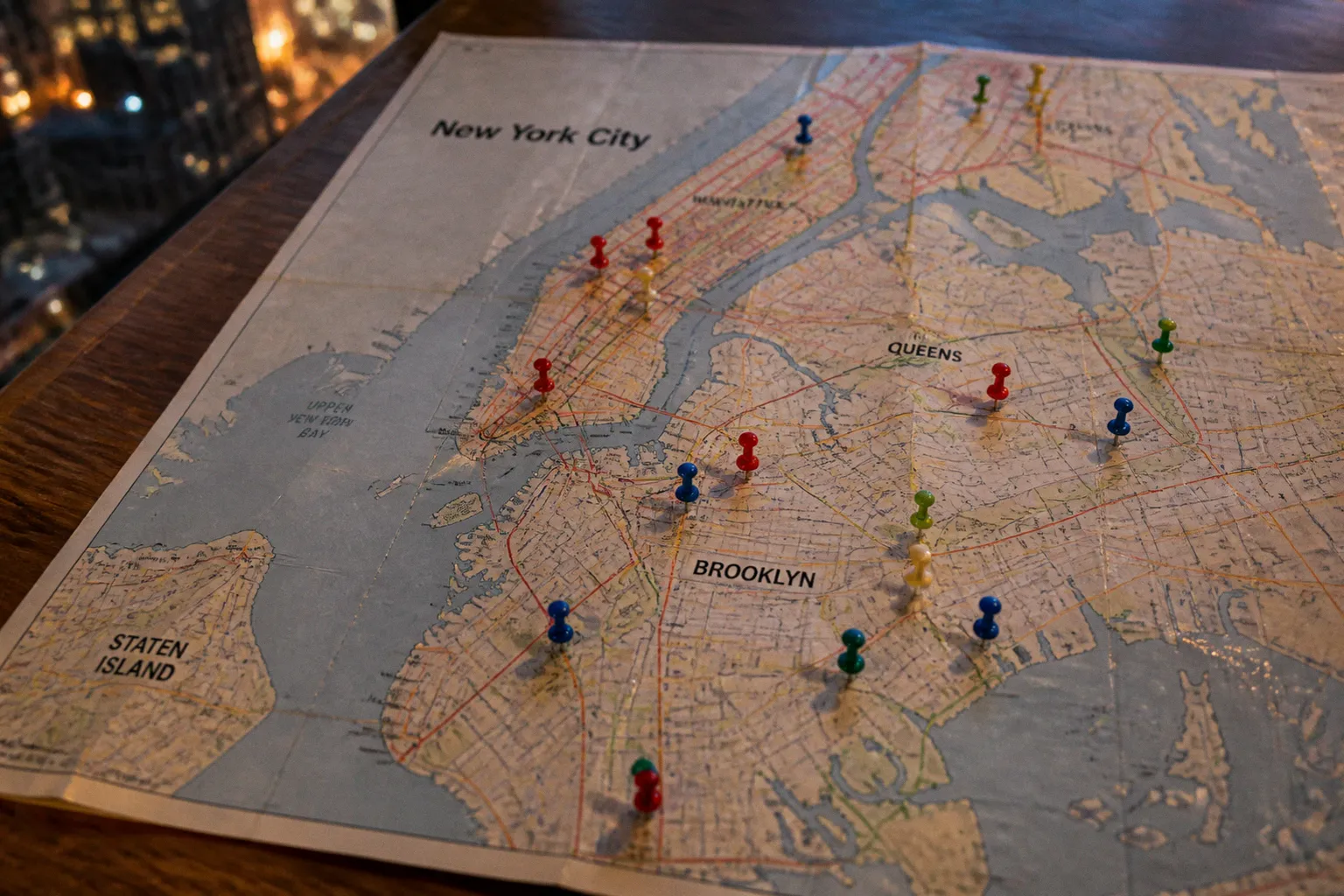
New York City does not have one social-service database. It has a crowded bazaar of referral tools, public-benefit screeners, food-access apps, provider directories, and data standards—each solving a different slice of the problem while occasionally pretending to be the whole map.
Compare car rental deals in United Kingdom
See available offersPartner link — DiscoverCars comparisonThat distinction matters. A case manager looking for a food pantry does not need the same infrastructure as a hospital trying to close a Medicaid referral inside an electronic medical record. A community organization building its own directory does not need a benefits screener. And no one benefits when a client is handed a glossy list of agencies that stopped answering the phone three years ago.
The current field of NYC social service referral platforms is best understood as a set of specialized systems:
- Findhelp for broad resource discovery and closed-loop referrals, including integration with healthcare workflows.
- Unite Us for coordinated care networks and referral tracking across participating providers.
- ACCESS NYC for screening eligibility for public benefits and programs.
- Plentiful for reserving food-pantry appointments.
- Open Referral NYC for organizations that need a more open, standards-based approach to managing service data.
They overlap just enough to create confusion and differ enough to make the wrong choice expensive.
A referral platform is not a directory with better branding. It is a workflow decision with consequences for follow-up, consent, data quality, and staff time.
The first question is not “Which platform is best?”
The first question is: What failure are you trying to prevent?
If the problem is that staff cannot find current programs, you need a dependable resource database. If clients are being referred but never actually connected, you need closed-loop coordination. If the obstacle is uncertainty about SNAP, Medicaid, or other public programs, you need eligibility screening. If the immediate issue is a long line outside a pantry, you need appointment scheduling—not another enterprise dashboard with a sad pie chart.
This is where boardroom theater tends to begin. Leaders select a platform because it promises “whole-person care,” “seamless ecosystem collaboration,” or some other corporate fog bank. Staff then discover that the tool does not solve their actual bottleneck, the provider data is uneven, and nobody has decided who owns follow-up.
A practical comparison looks more like this:
| Platform | Primary job | Best fit | What it does not replace |
|---|---|---|---|
| Findhelp | Resource search and closed-loop referrals | Healthcare systems, case managers, social-service navigators | Human judgment, benefits enrollment expertise, local relationship management |
| Unite Us | Coordinated care network and referral tracking | Organizations working inside a shared network | A universal citywide directory or standalone benefits screener |
| ACCESS NYC | Screening for public benefits and services | Residents, navigators, and frontline staff assessing eligibility | Closed-loop referral coordination |
| Plentiful | Food-pantry appointment reservations | New Yorkers seeking food distribution with scheduled pickup | A general social-service database |
| Open Referral NYC | Open data structure and directory management | Providers and technologists building or maintaining service directories | A ready-made referral network with guaranteed client follow-up |
The selection problem becomes manageable once the use case is stated without marketing language.
Findhelp: broad discovery with a serious referral engine
Findhelp is the strongest option in this group when the job involves locating social resources and tracking what happens after the referral. That second function is the important one. A list of agencies is easy to generate. Knowing whether a client reached the agency, received assistance, or disappeared into administrative purgatory is the harder operational problem.
NYC Health + Hospitals moved from NowPow to Findhelp in 2023 and integrated Findhelp into its Epic electronic medical record in January 2024. The platform connected users to more than 7,000 NYC-specific resource programs. In the first six months of the Epic integration, NYC Health + Hospitals reported an 86% closed-loop referral rate while screening more than 250,000 primary-care patients for social needs in 2023.
Those figures do not mean every organization will reproduce the result. Large health systems have scale, clinical infrastructure, dedicated staff, and a referral volume that can justify serious implementation work. Still, the numbers demonstrate what becomes possible when resource discovery is attached to an existing care workflow rather than left as a browser tab that staff remember to open after lunch.
Where Findhelp earns its keep
Findhelp is particularly useful when a provider needs to:
1. Search across multiple service categories. Housing, food, transportation, behavioral health, utilities, legal assistance, and other supports can be surfaced in one environment.
2. Send referrals rather than merely print contact information. The distinction is operational, not cosmetic.
3. Track outcomes. Closed-loop workflows allow organizations to see whether a referral was accepted, completed, declined, or left unresolved.
4. Embed social-needs screening into healthcare operations. The Epic integration is the obvious example.
5. Support repeated referral work at scale. A hospital, managed-care organization, or large safety-net provider has different requirements from a small neighborhood nonprofit serving a few dozen households a week.
For case managers, the real advantage is continuity. A client’s needs rarely arrive one at a time. Food insecurity may sit beside an eviction notice, a missed medication refill, and a lack of childcare. A platform that allows staff to move between needs without rebuilding the search from scratch can reduce the amount of administrative improvisation.
But Findhelp is not magic. It cannot make a provider responsive, create capacity at an overcrowded shelter, or repair a nonprofit’s cash flow hemorrhage. A closed-loop referral is only as closed as the receiving organization’s ability and willingness to report back.
The integration question
The Findhelp model becomes more valuable when it is connected to the system where staff already document client care. It becomes less valuable when implementation creates a second or third workflow that nobody owns.
Before adopting or expanding the platform, ask:
- Does the referral originate inside the case-management or clinical system?
- Who receives the referral on the provider side?
- What counts as “closed”?
- Can staff distinguish a completed service from a client who simply stopped responding?
- How are outdated programs removed?
- What consent is required before information moves between organizations?
- Can the organization handle the follow-up volume created by better referrals?
That last question gets ignored because it is not flattering. Better referral infrastructure can expose more unmet demand. If the platform makes it easier to identify 500 people who need help but the network can serve 80, the software has not failed. The system has become harder to lie to.
Unite Us: coordinated networks, not a universal directory
The Findhelp vs Unite Us NYC comparison is often framed as a contest between two interchangeable products. That is lazy analysis. Both can support social-care referrals, but the network model and operating context matter more than the logo on the login screen.
Unite Us is designed around coordinated care networks. In New York, Unite NYC—also referred to as Unite New York—has been supported by organizations including Public Health Solutions, the NYC Department of Health and Mental Hygiene, and Catholic Charities. Access is free for community-based organizations and safety-net providers participating in the network.
That free-access point matters. Many community organizations operate under permanent financial triage. If joining a coordinated network required a substantial licensing fee, the network would quickly become a collection of well-funded institutions referring to one another while the smaller neighborhood providers—the people who often know the client best—remain outside the fence.
Unite Us is most useful when multiple organizations are prepared to work inside the same coordinated ecosystem. The platform’s value grows with participation: more providers, clearer referral ownership, stronger follow-up habits, and a shared understanding of what a status update actually means.
What Unite Us does well
A coordinated network can help organizations:
- Route referrals to participating community providers.
- Track referral status across organizational boundaries.
- Create a shared workflow for care coordination.
- Reduce the number of times a client has to repeat the same story.
- Establish accountability for handoffs between healthcare and social-service providers.
This is especially relevant for organizations that already collaborate through a defined local or citywide initiative. If the network has active partners, agreed referral protocols, and staff who monitor the queue, Unite Us can function as operational connective tissue.
If the network is thin, however, the platform may feel like an expensive map of places that are technically present but practically unavailable. The existence of a provider record does not tell you whether the program has open slots, accepts the client’s borough, has language capacity, or returns calls.
NowPow is not a third option
The history here is worth getting straight because outdated platform references create avoidable confusion. Unite Us acquired NowPow in September 2021. The NowPow platform is no longer supported, and users have been redirected to Unite Us.
So when someone asks whether to use NowPow, Unite Us, or Findhelp, the answer is not a three-way comparison. NowPow belongs in the platform history, not in the current shortlist.
This is a small detail with practical consequences. Organizations working from old procurement documents, training slides, or inherited referral protocols can waste time building around a system that no longer operates independently. Nonprofit technology already produces enough administrative archaeology without adding to it.
ACCESS NYC: the benefits screener that should not be mistaken for a referral network
ACCESS NYC occupies a different lane. It is a public-benefits screening tool managed by the NYC Mayor’s Office for Economic Opportunity. It uses the NYC Benefits Platform API to screen for more than 35 City, State, and Federal programs.
That makes it highly relevant to frontline staff—and easy to misunderstand.
ACCESS NYC helps answer a question such as: Which benefits and public programs might this person qualify for based on the information provided? It does not function as a closed-loop referral platform in the same way as Findhelp or Unite Us.
That distinction should be printed above every intake desk. Screening is not enrollment. A list of potentially relevant programs is not a completed application. An application is not an approval. An approval is not a benefit that arrives on time.
The city’s broader Benefits and Programs Dataset includes more than 100 programs, giving navigators another source of structured information. But structured information still requires interpretation. Eligibility rules change. Household circumstances are messy. Immigration, disability, age, housing status, income, and documentation requirements can alter the path. A screener can point toward the door; it cannot promise that the door will open.
Where ACCESS NYC fits in the workflow
For a case manager or community navigator, ACCESS NYC works well near the beginning of an assessment:
1. Gather the household’s basic information.
2. Screen for potentially relevant benefits and services.
3. Identify which programs require immediate action.
4. Separate straightforward applications from cases that need specialist help.
5. Use a referral platform or direct provider relationship for follow-up where necessary.
6. Record what was submitted, what remains missing, and who owns the next step.
The mistake is treating the screening result as the end of the process. That produces vanity metrics: number of screenings completed, number of programs displayed, number of clients “served.” Meanwhile, the client is still choosing between groceries and a MetroCard.
ACCESS NYC is therefore a necessary tool in many settings, but it is not a replacement for a NYC social service directory for case managers, nor for a coordinated referral network. It tells you what may be available through public programs. It does not manage the full human-services handoff.
ACCESS NYC can identify a possible benefit. It cannot make a bureaucratic system answer the phone, approve the application, or process the case before the rent is due.
Plentiful: narrow scope, unusually practical result
Plentiful does one thing and does it without pretending to redesign the entire social safety net: it helps New Yorkers reserve pickup times at food pantries.
Developed by City Harvest and the United Way of New York City, Plentiful is a free mobile and SMS-based reservation platform. It is used across more than 235 NYC food pantries and has enabled more than 1 million client visits.
The narrowness is the point. Clients can schedule a food-pantry pickup instead of spending hours traveling to a site only to discover that the line is closed or supplies are gone. For people balancing work, childcare, disability, medical appointments, and unreliable transportation, predictability is not a minor convenience.
Plentiful is the best fit when the immediate need is food access and the participating pantry is in the system. It is not a replacement for a general resource database, benefits screening, housing navigation, or coordinated case management.
Why specialized tools matter
There is a persistent technology fantasy in human services: one platform will eventually contain every provider, every eligibility rule, every client record, every appointment, and every outcome. Then, presumably, the sector will achieve harmony and someone will issue a press release.
In practice, specialized tools often perform better because they are built around a concrete failure point. Plentiful addresses waiting and uncertainty in food distribution. That is a tangible operational problem with a tangible intervention.
The limitations are equally clear:
- Coverage depends on participating pantries.
- A reservation does not guarantee that a household’s broader food needs are resolved.
- The platform does not assess eligibility for other benefits.
- It does not create a care plan or coordinate unrelated services.
- A client may still need a case manager to navigate transportation, dietary needs, documentation, or recurring access.
Use it as a food-access instrument, not as a general-purpose atlas.
Open Referral NYC: the infrastructure beneath the directory
Open Referral NYC takes a different approach from the branded referral platforms. It is a network of local providers and technologists promoting the Human Services Data Specification, or HSDS, as an open data standard for human-services information.
For organizations that manage provider directories, this is the unglamorous layer that determines whether data can be moved, updated, and reused without being trapped in one vendor’s system. Open Referral NYC offers Airtable templates for managing social-service directories, making the approach more accessible to organizations that do not have a full engineering department hiding behind the reception desk.
This matters because directory quality is not merely a search-interface problem. It is a data-governance problem.
A record needs more than an agency name and a phone number. Useful service data may include:
- Physical location and service area.
- Hours, intake windows, and holiday closures.
- Eligibility requirements.
- Languages supported.
- Accessibility information.
- Documentation requirements.
- Cost or fee structure.
- Referral method.
- Capacity or appointment constraints.
- Date of last verification.
- Whether the service is currently accepting new clients.
Without those fields—and a process for maintaining them—a directory becomes a museum of former availability.
The case for open standards
Open standards can help organizations avoid building isolated databases that cannot communicate. They also make it easier to export, update, and share service information across tools.
But standards do not maintain themselves. Someone still has to call the provider, verify the hours, remove the dead program, and document the change. An Airtable template is not a staffing plan. The database will not update itself because the organization used the correct acronym.
Open Referral NYC is most appropriate for:
- Coalitions creating a shared service directory.
- Community organizations that need control over their own data.
- Local technology teams building referral tools.
- Researchers and planners mapping service availability.
- Organizations concerned about vendor lock-in and data portability.
It is less appropriate when a provider needs a ready-made, managed referral network with established workflows and outcome tracking.
How to choose among the NYC community resource database options
The right selection depends on the client population, referral volume, network participation, and tolerance for administrative overhead. The following route is more useful than a generic feature checklist.
Choose Findhelp when the referral must be tracked across a broad service landscape
Findhelp is the strongest candidate when an organization needs both resource discovery and follow-through. It suits hospitals, health systems, large human-services providers, and case-management programs that can support implementation and monitor outcomes.
Look closely at integration requirements, staff capacity, and the definition of a closed referral. If the organization cannot assign responsibility for follow-up, the platform may simply produce a more sophisticated backlog.
Choose Unite Us when the network already exists—or is being built deliberately
Unite Us makes sense when partner organizations are participating in a coordinated network and are prepared to exchange referral updates. It is especially relevant for safety-net providers and community-based organizations working within Unite NYC or related network structures.
Do not evaluate it as a standalone directory. Evaluate the actual network:
- Which organizations are active?
- Which services do they provide?
- How quickly do they respond?
- What information can they receive?
- Who handles referrals that are rejected or ignored?
- Are there clear escalation paths?
The brand cannot answer those questions. The local network can.
Use ACCESS NYC when benefits eligibility is part of the problem
If the client may qualify for SNAP, Medicaid, or another public program, ACCESS NYC belongs in the assessment workflow. It is a useful starting point for identifying possibilities and reducing the chance that staff overlook a program.
It should sit beside, not instead of, a referral and follow-up process. A benefits screener is a compass. It is not transportation.
Use Plentiful when food-pantry access is the immediate bottleneck
For food providers and navigators, Plentiful can reduce wasted trips and waiting time. Its value is strongest where participating pantries have appointment availability and clients can use mobile or SMS access.
The platform should be paired with broader food-security and benefits navigation for households facing recurring food insecurity. A scheduled pantry visit is a concrete intervention, not a complete case plan.
Use Open Referral NYC principles when data ownership is the strategic issue
If the organization is building a coalition directory or trying to prevent another isolated spreadsheet from becoming mission-critical infrastructure, open data standards deserve attention.
The cost is governance. Someone must own the directory, define update schedules, establish verification rules, and decide what happens when providers do not respond. Open systems reduce vendor dependence, but they do not reduce the need for discipline.
Data quality is the hidden deciding factor
Platform comparisons often focus on features: search filters, messaging, dashboards, APIs, integrations. Those features matter, but they sit on top of a more basic question: Is the service information accurate enough to act on?
A technically elegant platform with stale provider data is a referral machine pointed at locked doors.
For a directory or referral network to remain useful, organizations need a maintenance rhythm. That may include scheduled verification, automated reminders, provider self-updates, and clear rules for marking records as unverified. The exact cadence will vary by service type. Shelter availability changes faster than a community arts program’s address. Pantry hours shift around holidays. Public-benefit rules can change without caring about your content calendar.
Case managers also need a way to record local knowledge. A directory may say that a program serves all five boroughs, while frontline staff know that the Queens intake line has been unreachable for two weeks. That intelligence should not live only in hallway conversations.
The most useful directory data combines standardized fields with operational notes. Standardization helps systems exchange information. Local notes help people avoid predictable failure.
Consent, privacy, and the cost of moving information
Referral systems move personal information. That makes consent and data handling part of platform selection, not a compliance footnote reserved for the final procurement meeting.
Healthcare organizations, behavioral-health providers, and community organizations may operate under different privacy obligations and data-sharing agreements. The more sensitive the information, the less acceptable it is to treat referral data as harmless administrative metadata.
The February 2026 compliance date associated with consent management under 42 CFR Part 2 is a reminder that organizations need to understand how sensitive substance-use-disorder records are handled and shared. The practical question is not simply whether a platform has a consent feature. It is whether staff understand when consent is required, what information is being disclosed, where it is recorded, and how a client can change or revoke permission.
A platform should make the correct action easier than the careless one. If staff must navigate six screens to document consent but can forward sensitive information in one click, the system has already made a governance decision.
When comparing Findhelp, Unite Us, or any other coordinated referral infrastructure, ask:
- What client information is shared at referral?
- Can staff limit the disclosure to what is necessary?
- How is consent recorded?
- How are role permissions managed?
- What happens when a client declines information sharing?
- How long are referral records retained?
- Can the organization export its data?
- What audit trail exists when a record is viewed or changed?
No platform eliminates the need for policy. A platform can, however, expose whether leadership has one.
A practical operating model for case managers
The best technology still fails when the workflow is vague. A case manager should not have to guess whether a referral is complete, whether another staff member owns it, or when to try a different provider.
A workable operating model separates five moments:
1. Assessment: identify the actual barrier, not just the category. “Housing” may mean an eviction notice, a shelter exit, inaccessible housing, unpaid utilities, or a missing document.
2. Discovery: search the relevant database or directory, checking geography, eligibility, intake method, and current availability.
3. Consent and referral: share only the information needed and use the platform’s referral path where appropriate.
4. Follow-up: set a date and an owner. “Referred” is not a next step.
5. Outcome recording: distinguish between contacted, accepted, served, declined, unreachable, and unresolved.
That vocabulary matters. If every outcome is labeled “successful,” the organization will produce beautiful reports and terrible decisions.
The system should also accommodate dead ends. A provider may reject a referral because the client lives outside its catchment area. Another may have no capacity. A third may never respond. Those outcomes should trigger alternatives rather than disappear into a dashboard.
This is why a NYC social service directory for case managers needs more than an alphabetical list. It needs route information: how to enter the service, what obstacles to expect, and what to do when the first option fails.
The expensive mistake: choosing a platform before defining ownership
The most common failure is not choosing Findhelp instead of Unite Us. It is choosing any platform without deciding who owns the result.
Technology procurement often has a recognizable sequence:
- Leadership announces a modernization initiative.
- A vendor demonstrates a clean dashboard.
- Staff applaud the search function.
- Implementation begins.
- Everyone discovers that provider data is incomplete.
- Nobody has time to verify it.
- Referral queues accumulate.
- Leaders report adoption metrics.
- Clients continue calling three numbers to find one open appointment.
That is boardroom theater with a software subscription attached.
Before selecting a platform, assign responsibility for:
- Directory maintenance.
- Provider onboarding.
- Referral triage.
- Follow-up deadlines.
- Escalation when a provider does not respond.
- Consent and privacy procedures.
- Staff training.
- Outcome reporting.
- Contract and data-export decisions.
The organization does not need a perfect workflow on day one. It does need an honest one.
The bottom line
There is no single best NYC social service referral platform because there is no single referral problem.
- Findhelp is the broad, workflow-oriented choice for resource discovery and closed-loop coordination, particularly where healthcare integration matters.
- Unite Us is the network choice when participating providers are prepared to coordinate inside a shared system.
- ACCESS NYC is the benefits-screening infrastructure for identifying potentially relevant City, State, and Federal programs.
- Plentiful is the specialized food-access tool for scheduling pantry pickup.
- Open Referral NYC is the standards-based approach for organizations that need to build, manage, and exchange service-directory data with more control.
The hard reality is less flattering than the vendor language: a platform will not compensate for weak provider capacity, stale data, unclear ownership, or leadership that counts referrals instead of completed connections.
Choose the tool that matches the operational failure. Then fund the people who keep the tool honest. Otherwise, you are not building a social-service network. You are furnishing the burning building with a better sign-in sheet.