Ripley's Aquarium of Canada: ticket pathways for every visitor
Buying tickets for Ripley’s Aquarium of Canada is not difficult. Buying the right ticket is where people manage to turn a straightforward aquarium visit into a small administrative crisis.
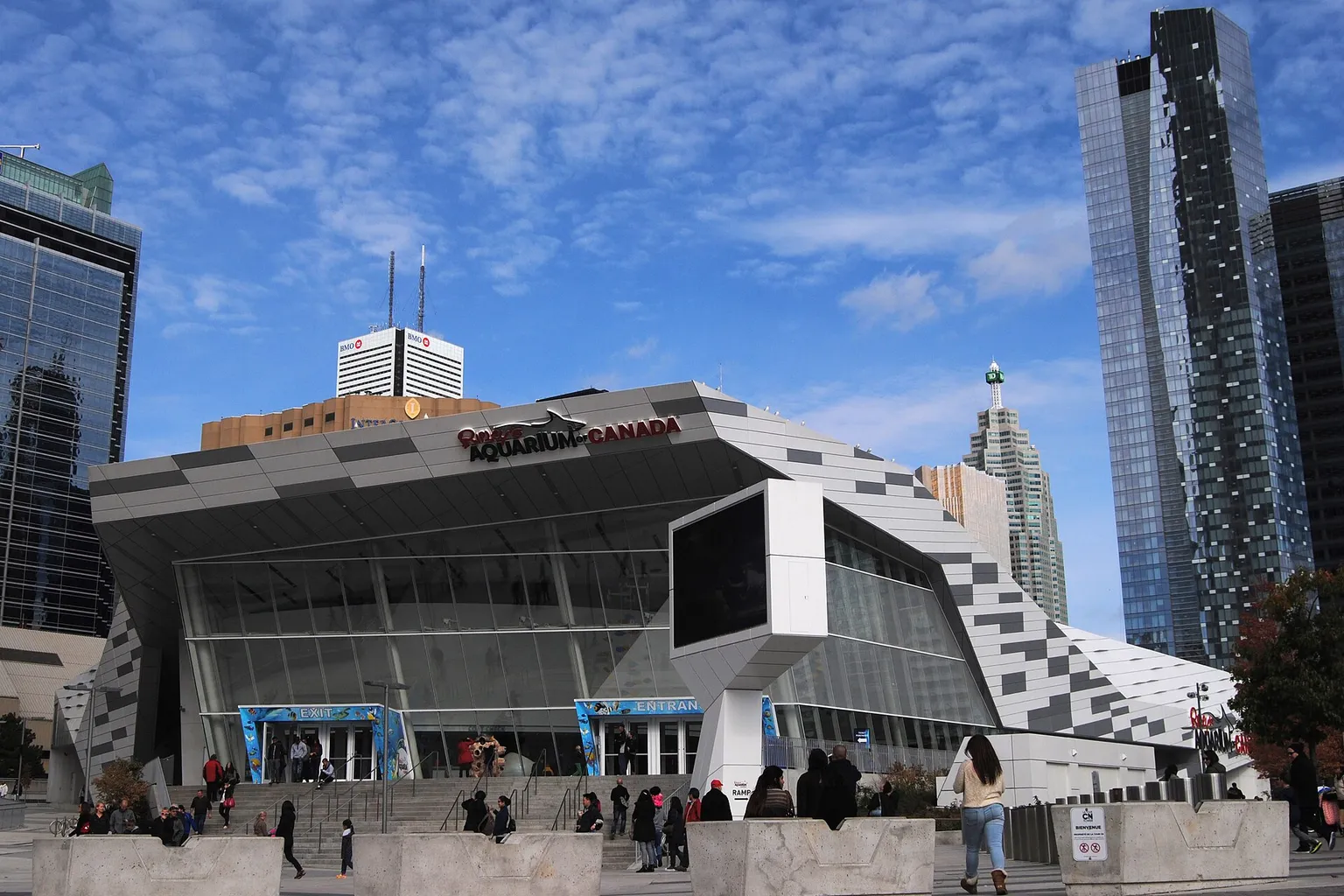
Ripley’s Aquarium of Canada: Ticket Pathways for Every Visitor
The choice is essentially between a scheduled Timed Ticket, a date-flexible Flex Ticket, a bundled option such as Toronto CityPASS, or an in-person purchase at the aquarium. Each route solves a different problem. The mistake is treating them as interchangeable when they are not.
Tickets and prices
Ripley's Aquarium of Canada
| Option | Type | Rating | From | |
|---|---|---|---|---|
| Entry ticket — Day or Sharks After Dark optionGetYourGuide | entry ticket | ★ 4.62,194 reviews | fromCAD46.57 | Book online |
| Official ticket — Adult (14+)Official | official ticket | — | fromCAD100 | Book online |
At the box officeAdultCAD100ChildCAD30ReducedCAD75Official website — ripleys.com
Ripley’s Aquarium of Canada is at 288 Bremner Boulevard in downtown Toronto, beside the CN Tower and within easy reach of the area around Union Station. It welcomes visitors daily from 9:00 a.m. to 9:00 p.m. The attraction is popular, centrally located, and particularly busy during predictable windows. That means the best way to book Ripley’s Aquarium tickets depends less on loyalty to one sales channel and more on whether you value certainty, flexibility, or the ability to improvise.
Decoding the timed-entry system
A Timed Ticket is the most controlled admission route. You choose a visit date and a specific one-hour arrival window in advance. A ticket for 1:00 p.m., for example, gives you an arrival window between 1:00 p.m. and 2:00 p.m. It is not a vague suggestion to appear sometime that afternoon. The hour matters.
Once inside, you can explore the aquarium rather than sprint through it. The time restriction applies to entry, not to a countdown clock inside the exhibits. That distinction is obvious on paper and apparently invisible to a surprising number of visitors.
Timed entry is usually the cleanest option when your day already has other fixed commitments:
- A CN Tower reservation follows the aquarium visit.
- A theatre booking or restaurant reservation limits your afternoon.
- You are coordinating a family group that becomes unmanageable whenever plans are described as flexible.
- You are visiting during a weekend, holiday, or school break.
- You are arriving from another attraction and need a reliable entry window.
The principal advantage is not glamour. It is reduced uncertainty. Purchasing online in advance allows you to bypass the general ticket-purchase line and proceed through the appropriate admission process for timed visitors. That can be a meaningful difference during the busiest parts of the day, when the aquarium is already absorbing a heavy flow of visitors.
Ripley’s Aquarium timed entry explained
The one-hour window is best understood as a gate, not a reservation for a private aquarium experience. You need to arrive during the selected window, and the operational purpose is to regulate the number of people entering at once.
That makes punctuality useful, but it does not mean you should plan a cross-city dash with no margin. Downtown Toronto traffic, transit delays, a child who has suddenly developed a philosophical objection to walking, and the usual urban nonsense can all interfere with a perfect schedule. If you book a timed window, build in reasonable travel time.
The ticketing structure favors visitors who know their day. It is less forgiving for people whose itinerary is still being negotiated over breakfast.
A Timed Ticket buys certainty at the entrance. It does not buy immunity from arriving late, getting lost downtown, or believing every Toronto schedule runs on your personal calendar.
The aquarium’s scale also argues for treating the visit as a substantial stop rather than a quick filler between landmarks. Ripley’s contains more than 20,000 aquatic animals representing over 450 species. Its major areas include Dangerous Lagoon, Planet Jellies, Canadian Waters, and Rainbow Reef. Dangerous Lagoon’s 97-meter underwater tunnel is the kind of exhibit that makes a hurried visit feel like a poor management decision.
Flex Tickets: useful freedom, with one important catch
Flex Tickets suit visitors who want to preserve the day’s shape until the day actually arrives. They do not require a scheduled reservation and can be used for one single admission within one year from the purchase date.
That is real flexibility. It is also not an unlimited backstage pass.
Flex Tickets remain subject to building capacity. If the aquarium is full or operating under restricted capacity, a Flex Ticket does not give you magical priority over the people already inside. The ticket removes the need to select a specific entry time in advance; it does not repeal the laws of crowd management.
This option makes sense when:
- Your Toronto itinerary is weather-dependent.
- You are traveling with people who are incapable of committing to a timetable before noon.
- You want to choose between the aquarium and nearby attractions on the day.
- You are staying in the city long enough to move the visit if the first plan collapses.
- You are buying in advance but do not yet know which date will work.
The one-year validity period gives Flex Tickets a wider planning horizon than a standard scheduled admission. That can be useful for local visitors, repeat travelers, or anyone arranging a gift. But the practical value depends on capacity at the moment you arrive. A flexible ticket is not the same thing as a guaranteed entry time.
Timed Tickets versus Flex Tickets
| Decision point | Timed Ticket | Flex Ticket |
|---|---|---|
| Visit date | Selected in advance | Not tied to a scheduled date |
| Entry time | One-hour arrival window | No scheduled reservation |
| Best for | Fixed itineraries and peak days | Open-ended plans and date uncertainty |
| Queue advantage | Online purchase can bypass the general ticket-buying line | Avoids advance scheduling but may still face capacity limits |
| Validity | Connected to the selected visit arrangement | One single use within one year from purchase |
| Main risk | Arriving outside the selected window | Showing up when the building is at capacity |
| Planning style | Control the day before it starts | Keep the day adjustable |
There is no universally superior ticket. There is only the ticket that matches the failure you are trying to avoid.
If the failure is standing in a long purchase line while your next reservation approaches, choose the scheduled route. If the failure is losing money because your day changes, flexibility may be worth more than precision. Boardroom theater is pretending these are identical products. They are not.
Online, mobile, or box office: which route actually works?
The phrase online versus box office tickets sounds like a simple price comparison. In practice, the bigger question is what each channel does to your time and certainty.
Booking online
Online booking is the most practical route for visitors who already know when they want to go. It lets you select an available timed entry window in advance and avoid the general ticket-purchase line at the aquarium.
It also gives you a chance to sort out the logistics before you are standing outside the building with a group, a phone at 12% battery, and someone asking whether the aquarium is the building with the sharks or the tower with the elevators.
For most planned visits, the online path is the sensible default because it provides:
- A scheduled arrival window when you choose a Timed Ticket.
- A digital ticket that can be presented from a mobile device.
- Less dependence on same-day ticket availability.
- A clearer way to coordinate several visitors.
- The option to select a Flex Ticket if your date remains uncertain.
Online purchase does not mean every ticket has the same conditions. Read the admission type before completing the transaction. A timed reservation and a flexible admission solve different problems, and the cheapest-looking option is not automatically the least expensive in practical terms if it forces you to reorganize the rest of your day.
Using mobile tickets at entry
A mobile ticket is convenient, but convenience still requires basic competence. Keep the ticket accessible before you reach the scanner. Do not assume a screenshot, an email buried beneath twenty promotional messages, or a phone with a shattered screen will produce a frictionless admission experience.
Digital tickets may be presented directly for scanning, just as physical passes can be used where applicable. For CityPASS holders, the pass is presented at the designated Ticket Holders line, rather than joining the line for visitors purchasing individual admission.
A few unglamorous preparations help:
1. Open the ticket before approaching the entrance.
2. Increase screen brightness if the barcode is difficult to read.
3. Make sure each member of the group knows whether they are using an individual ticket or a shared pass.
4. Keep the booking confirmation available in case Guest Services needs to resolve a scanning issue.
5. Avoid relying on a weak mobile signal at the door.
None of this is advanced operations management. It is simply the minimum standard for not making a barcode scanner the most powerful entity in your itinerary.
Buying at the box office
The box office remains useful for visitors who are already downtown, have not committed to a time, or need assistance choosing an admission route. It is the most obvious option for spontaneous visits, but it is also the route most exposed to queues and availability constraints.
Buying at the aquarium may make sense when you:
- Have just arrived in the CN Tower area and want to decide in person.
- Are uncertain which ticket type fits your group.
- Need help with a ticketing issue.
- Are carrying a qualifying pass or admission product that requires specific handling.
- Prefer staff assistance over navigating an online checkout.
The trade-off is straightforward: the box office can answer questions, but it cannot guarantee that the time you want will be available. During busy periods, that is not a minor detail. Peak visitor hours are generally around 11:00 a.m. to 2:00 p.m. on weekdays and from 11:00 a.m. to 5:00 p.m. on weekends and holidays.
If you arrive during those windows without a timed admission, you may find yourself competing with the largest crowd of the day. The aquarium does not become less popular because your plan was spontaneous.
Peak hours, weekends, and the fiction of the “quick visit”
Ripley’s Aquarium is open daily from 9:00 a.m. to 9:00 p.m., but operating hours do not distribute visitor traffic evenly. People tend to converge late in the morning, and weekend and holiday demand stretches deeper into the afternoon.
The practical map looks like this:
- Early morning: Usually the strongest choice for visitors who want a calmer start and a more predictable arrival process.
- Late morning through early afternoon on weekdays: A common peak period, especially for school groups, families, and visitors combining the aquarium with other downtown attractions.
- Late morning through late afternoon on weekends and holidays: The broadest high-traffic window.
- Evening: Potentially useful for visitors with daytime commitments, though the best choice depends on the exhibits and atmosphere you want rather than assuming every late visit will be quiet.
The “quick visit” assumption is one of the more persistent pieces of visitor fiction. The aquarium contains multiple major exhibit areas, and the Dangerous Lagoon tunnel alone is not something most people want to treat as a hallway between errands. Families stop. Children double back. Adults who claimed they were only interested in one exhibit discover that jellyfish are far more compelling than expected.
That is why ticket planning should connect to the rest of your route through downtown Toronto. The aquarium sits close to the CN Tower, but close on a map does not mean instant in practice. Allow time for the entrance process, the exhibits, photos, pauses, and the predictable human desire to watch sharks for longer than originally announced.
Toronto CityPASS and bundled admission
Toronto CityPASS can be a strong option for visitors planning several participating attractions rather than the aquarium alone. The value is not in treating it as a special aquarium ticket. The value comes from using one bundled admission structure across a broader Toronto itinerary.
For Ripley’s Aquarium, CityPASS holders can present a digital or physical pass directly to the ticket scanners in the designated Ticket Holders line. They do not need to join the line for visitors purchasing individual tickets.
That distinction matters. A bundled pass is only useful if you use the attractions it covers and understand how its admission process works. Otherwise, it becomes another piece of travel merchandise that looked efficient during planning and becomes confusing at the entrance.
CityPASS is worth considering when:
- The aquarium is one of several attractions already on your itinerary.
- You prefer a bundled pass to multiple separate transactions.
- Your group benefits from having admissions organized in one place.
- You want to use the Ticket Holders line rather than purchasing individual entry at the aquarium.
It may be less compelling when the aquarium is your only planned attraction or when your schedule is too uncertain to make use of the wider bundle. A pass is not automatically a saving simply because it contains several logos. That is vanity metrics for tourists: counting included attractions instead of asking whether you will actually visit them.
The no-re-entry rule changes how you plan the day
Once a ticket is scanned at entry, Ripley’s Aquarium operates under a strict no-re-entry policy unless Guest Services grants special permission.
This is the detail that can quietly wreck an otherwise competent itinerary.
Do not plan to enter the aquarium, leave for lunch, and stroll back in later on the same admission. Do not assume a forgotten jacket, a charging cable, or an outside appointment can be handled with a casual exit and return. If you need to leave for a specific reason, speak with Guest Services before exiting and do not rely on an exception being granted.
The no-re-entry rule affects practical decisions:
- Eat and use the restroom before entering if that makes the visit easier for your group.
- Bring the essentials you need for the visit rather than planning a mid-visit supply run.
- Do not schedule a nearby appointment so tightly that you may need to leave and return.
- Coordinate with anyone who may arrive separately before the first ticket is scanned.
- Treat the aquarium visit as one continuous block in your day.
This is not a criticism of the policy. Attractions use entry controls for operational reasons. But visitors need to understand the rule before the scanner, not after discovering that a quick walk outside has become a negotiation.
The aquarium is easy to reach. It is less easy to leave and re-enter. Build your itinerary around one continuous visit, not an imaginary all-day pass.
Arriving at 288 Bremner Boulevard
Ripley’s Aquarium of Canada is located at 288 Bremner Boulevard, right beside the CN Tower in downtown Toronto. The location makes it easy to combine with other major attractions, but it also means the surrounding area can become busy at exactly the times when visitors are most likely to arrive.
The arrival strategy should follow your ticket type.
If you have a Timed Ticket
Arrive with enough margin to find the building, orient yourself, and access the correct entrance process before the one-hour window begins. Do not intentionally arrive at the last possible minute. A downtown landmark may be obvious, but the correct line and scanner are not always obvious when several attractions are operating nearby.
Have the ticket ready on your phone. If you are part of a larger group, make sure the person holding the booking is not still navigating the city with the ticket inaccessible.
If you have a Flex Ticket
The absence of a reservation does not eliminate the need for planning. Check the day’s likely traffic pattern and consider arriving earlier if you are visiting on a weekend or holiday. Flex admission is particularly useful when your schedule is uncertain, but capacity remains the controlling factor.
The ticket gives you room to change the date. It does not guarantee that every popular afternoon will be available at the exact moment you decide to appear.
If you have Toronto CityPASS
Go to the designated Ticket Holders line and present the digital or physical pass to the ticket scanners. Do not join the general ticket-purchase line unless staff direct you there. The entire point of the pass is to streamline admission across the attractions it covers; standing in the wrong queue is an avoidable own goal.
What to choose for different visitor types
The best ticket pathway becomes clearer when the visitor is honest about how they travel.
For a tightly scheduled first-time visitor
Choose a Timed Ticket. You are already coordinating landmarks, restaurants, transport, and possibly a group with different tolerance levels for waiting. A scheduled entry reduces one of the variables.
For a flexible traveler staying several days
A Flex Ticket may be the better fit, especially if you want to choose the aquarium visit around weather or the rest of your Toronto plans. Remember the capacity limitation and the one-year single-use validity.
For a multi-attraction Toronto itinerary
Compare your actual plans with Toronto CityPASS before purchasing individual admissions. If the aquarium is one stop in a full attraction schedule, the bundled route may simplify entry and reduce separate ticket handling.
For a same-day spontaneous visit
The box office is available, but do not confuse availability with guaranteed convenience. If the day falls inside a peak period, buying online before arrival may give you a cleaner route through the entrance process.
For families with young children
Choose the option that minimizes uncertainty. For many families, that means a timed arrival earlier in the day. The goal is not to create a military operation; it is to avoid discovering at the entrance that the entire group must wait, reschedule, or negotiate capacity rules while hungry.
The practical decision
If you want the shortest answer, use this hierarchy:
1. Buy a Timed Ticket online when your date and schedule are known.
2. Choose a Flex Ticket when you need to preserve the option to change the day.
3. Use Toronto CityPASS when the aquarium is part of a genuine multi-attraction plan.
4. Buy at the box office when you are making a same-day decision or need staff assistance, accepting that queues and capacity may work against you.
5. Plan one continuous visit because standard admission does not provide free re-entry.
There is no reason to overcomplicate the purchase. The complication comes from ignoring the conditions attached to each pathway.
Ripley’s Aquarium of Canada is a major Toronto attraction with a predictable operational pattern: busy middle-of-day periods, a central location, timed entry for visitors who want certainty, flexible admission for those who need options, and a strict no-re-entry policy once inside. Work with those facts and the visit is straightforward. Treat the ticket as a decorative afterthought and the aquarium becomes another downtown bottleneck.
The necessary reality check is simple: the best way to buy tickets for Ripley’s Aquarium of Canada is not the route with the most marketing language or the most attractive-looking button. It is the route that matches your schedule before you arrive, your tolerance for queues, and your willingness to accept capacity limits. Everything else is boardroom theater with fish.
Practical info
Currency: CAD
Driving: on the right
Emergency number: 911
FAQ
What is the difference between a Timed Ticket and a Flex Ticket?
Can I leave the aquarium and come back later on the same day?
Do I need to print my tickets before arriving?
What are the busiest times to visit the aquarium?
How does the Toronto CityPASS work for entry?
Photo: EuroCarGT / CC BY-SA 4.0 — Wikimedia Commons