Templo Mayor Museum Tickets: Route from Booking to Entry
Templo Mayor Museum tickets provide access to two connected sites: the open-air archaeological zone of Tenochtitlan and the museum’s eight permanent exhibition rooms.
The admission system is simple, but the practical differences between visitor categories, purchase channels, operating days, and restricted archaeological areas determine how the visit should be planned.
Tickets and prices
Templo Mayor Museum
| Option | Type | Duration | Rating | From | |
|---|---|---|---|---|---|
| Skip-the-line ticket — Separate entranceGetYourGuide | skip-the-line | 1 day | ★ 4.2108 reviews | fromMXN493.27 | Book online |
| Official ticket — Normal rateOfficial | official ticket | — | — | fromMXN100 | Book online |
At the box officeAdultMXN100Official website — whichmuseum.com
The site operates from Tuesday through Sunday, from 9:00 AM to 5:00 PM. It is closed on Mondays. Foreign non-resident visitors pay the standard international admission rate. Mexican nationals and residents use a separate rate structure. Several groups qualify for free admission with valid official identification. Sunday free entry applies to Mexican citizens and residents. It does not apply to foreign non-resident tourists.
The museum is at Seminario No. 8 in Mexico City’s Historic Center, beside the Zócalo area and close to the Zócalo metro station. The location makes Templo Mayor easy to combine with other central sites. It also creates a planning constraint: the archaeological zone and museum have a fixed closing time, and the visit has more than one physical section.
Understanding the Templo Mayor Museum entry fee
The Templo Mayor Museum entry fee depends on the visitor’s status. The principal distinction is not between museum-only and archaeological-zone tickets. Standard admission covers both components.
The ticket includes:
- Entry to the exposed archaeological remains of Tenochtitlan.
- Access to all eight permanent exhibition rooms.
- Standard access to the museum route during the published opening hours.
- Eligibility for certain limited-capacity archaeological visits, when advance reservation requirements are met.
There is no need to purchase separate standard tickets for the museum and the open-air zone. The admission structure treats them as one visit. A visitor who wants only the museum does not receive a separate reduced product by default, based on the available admission information.
The category applied at the ticket office depends on documentation. Mexican nationals and residents use the domestic admission category. Foreign non-resident visitors use the international category. The distinction matters at the point of sale, so a visitor should carry the identification required to support a resident, student, teacher, senior, disability, or child category.
Free admission is available to several groups:
- Children under 13 years of age.
- Students with valid official identification.
- Teachers with valid official identification.
- Senior citizens with valid official identification.
- Visitors with disabilities who can present valid documentation.
- Mexican citizens and residents on Sundays.
The Sunday rule requires precise interpretation. It is a benefit for Mexican citizens and residents. It is not a general free-entry policy for every visitor who arrives on Sunday. A foreign non-resident tourist should plan for the standard international admission category regardless of the day.
The ticket is not the complicated part. Visitor classification, documentation, and opening-day selection determine the usable route.
The available facts do not establish the exact queue duration at the physical ticket office on specific dates. That means a fixed waiting-time estimate would be unreliable. Queue conditions can change with school groups, holiday traffic, central Mexico City events, and the number of visitors arriving near opening time.
How to buy Templo Mayor Museum tickets
There are two basic purchase routes: the physical ticket office and advance online booking.
On-site purchase remains available. This is the direct option for visitors who prefer to decide after reaching the Historic Center or who do not need a timed third-party product. It also avoids depending on the inventory shown by online sellers. The limitation is operational rather than contractual: the available queue and ticket-office conditions on a specific day cannot be predicted from the published schedule.
Advance purchase is available through official INAH channels and through third-party travel platforms. Online products can differ in format. Some provide standard entry. Others package admission with a guided component or a skip-the-line arrangement. These products should not be treated as interchangeable with the museum’s own ticket-office process.
The purchase channel should be selected against the actual requirement:
| Requirement | Direct ticket office | Official online channel | Third-party platform |
|---|---|---|---|
| Standard admission | Available | May be available | May be available |
| Need to decide on the day | Suitable | Less suitable | Depends on cancellation terms |
| Advance planning | Limited to arrival logistics | Suitable | Suitable |
| Guided or skip-the-line product | Not the default route | Depends on the product | Commonly offered |
| Proof of free-entry eligibility | Required at entry or ticketing | Still required where applicable | Product rules may differ |
| Control over official inventory | Direct | Highest | Depends on platform allocation |
| Need to review meeting instructions | Minimal | Usually limited | Essential for tours |
The phrase Templo Mayor tickets online covers more than one type of booking. A standard digital admission ticket, a guided tour, and a skip-the-line entry product can have different meeting points, redemption procedures, and cancellation rules. The presence of a booking confirmation does not remove the need to read the instructions attached to that specific product.
For a direct museum visit, the official INAH route is the reference point for admission rules and institutional opening information. For an added tour service, the third-party listing controls the operational details of that product. The two sources serve different functions.
What to check before completing an online booking
An online reservation should be reviewed for the following fields:
- The date and entry time, if the product uses timed access.
- Whether the product covers standard admission or includes a guide.
- Whether the meeting point is at the museum entrance or at another location in the Historic Center.
- Whether skip-the-line access refers to a reserved entry process or only to a guided group arrangement.
- Whether the ticket is refundable, transferable, or fixed to the selected date.
- Whether identity documents are required for the booked category.
- Whether children or visitors using free admission need separate registration.
- Whether the product includes access to restricted archaeological sites or only to the main route.
A booking page can present several variants under the same general Templo Mayor Museum label. The product name alone is not enough to establish what the visitor receives. The inclusion of the open-air zone and eight exhibition rooms belongs to the standard museum admission. Special underground visits require a separate reservation process even though they are included in the standard entrance fee when available.
Templo Mayor Museum hours and tickets: planning the route
The published operating schedule is Tuesday through Sunday, 9:00 AM to 5:00 PM. Monday is a closure day. This is the first planning filter. A ticket search for Monday is not a valid substitute for checking the museum’s operating calendar.
The site is in the Historic Center, near the Zócalo metro station. The central location reduces transfer complexity, but it does not reduce the need to allocate time. The visit contains an exterior archaeological route and an indoor museum route. Moving between them is part of the experience and part of the schedule.
A practical sequence is:
1. Arrive in the Historic Center with enough time to complete ticketing or redemption.
2. Confirm the entry conditions at the access point.
3. Walk the open-air archaeological zone before or after the museum, depending on weather and crowd conditions.
4. Reserve time for all eight permanent exhibition rooms.
5. Keep additional time for restricted-area visits if one has been confirmed by email.
6. Leave a margin before the 5:00 PM closing time.
The order can change. The margin should not. A visitor who arrives late in the operating window may technically enter but still have insufficient time to cover both parts of the complex. The published closing time is not a recommendation for arrival. It is the end of the visitor day.
The exterior section and the museum perform different functions. The archaeological zone exposes the scale and structure of the ceremonial center. The museum supplies the object-level and interpretive sequence. Treating the museum as a short supplement to the ruins produces an incomplete visit. The eight rooms are part of the standard admission, not an optional add-on.
The site’s position beside the Zócalo also affects arrival timing. The surrounding area is a major public space with pedestrian movement, transport access, and other visitor destinations. A route that looks short on a map can still require time for navigation, ticket redemption, and entry control. This is particularly relevant when the ticket is tied to a guided meeting time.
The most reliable arrival strategy
For visitors with standard admission, an earlier arrival creates more route flexibility. It allows the outdoor zone and museum to be covered without compressing the indoor section near closing.
For visitors with a reserved underground visit, the reservation time controls the route. The special visits are offered at set morning times from Tuesday through Saturday. A visitor booked for one of these slots should treat the email confirmation as the primary operational document and arrive before the stated time.
For visitors relying on free admission, the documentation issue should be resolved before reaching the counter. The benefit is conditional on proof. A general claim of student, teacher, senior, disability, or resident status is not the same as valid official identification.
Exclusive underground archaeological sites
Templo Mayor also offers limited-capacity guided visits to the underground Templo de Ehécatl and Juego de Pelota archaeological sites. These areas are distinct from the standard open-air route. They are not accessed by simply presenting a normal ticket at any time during the day.
The special visits operate from Tuesday to Saturday at 9:30 AM, 11:00 AM, and 12:00 PM. Advance email reservation is required. The visit is included in the standard Templo Mayor entrance fee when the reservation is available and confirmed. Capacity is limited. The Templo de Ehécatl groups have a maximum of 15 people.
This creates a two-stage access model:
- The standard ticket provides the base admission.
- The email reservation provides access to a specific limited-capacity visit.
The second stage is operationally decisive. Without advance confirmation, a visitor should not assume that underground access will be available on arrival. The published time slots indicate a controlled schedule, not open access.
The special route also changes the recommended arrival plan. A visitor with a 9:30 AM reservation should not schedule arrival for 9:30 AM. Ticket validation, finding the meeting point, and group assembly occur before the archaeological visit begins. The exact buffer should follow the instructions in the reservation message.
A visitor interested in these sites should contact the museum through the stated reservation channel before purchasing a broader itinerary around the Zócalo. The available information confirms the existence of the time slots and the advance email requirement. It does not establish real-time availability for a particular date.
The underground sites should also be separated from third-party guided products in the visitor’s planning. A platform tour may advertise Templo Mayor access but still cover only the standard museum and archaeological zone. Inclusion of a guide does not prove inclusion of the Templo de Ehécatl or Juego de Pelota visit. The product description must specify the restricted sites.
Underground access is a reservation category, not a walk-in feature of the general ticket.
Free admission and documentation controls
Free entry policies reduce the admission cost for eligible visitors, but they do not remove the control process. The relevant category must be supported by official identification. This applies to children, students, teachers, senior citizens, and visitors with disabilities.
The Sunday policy has a separate logic. Mexican citizens and residents can enter free on Sundays. Foreign non-resident visitors remain subject to the standard international admission rate. The day of the week does not change the foreign visitor category.
A visitor using a free-entry rule should prepare for three possible controls:
1. Eligibility. The visitor must fall within the defined group.
2. Documentation. The visitor must present valid official identification.
3. Ticketing procedure. The museum may still require a ticket or admission record even when the charge is waived.
These controls matter for family groups. A child under 13 may qualify for free admission, while accompanying adults may not. A student category applies to the student with valid identification, not automatically to the entire group. A resident benefit applies to qualifying residents and does not extend to unrelated foreign visitors in the same booking.
Online platforms may display different instructions for free-entry categories. Some products are designed for visitors purchasing paid admission and may not be suitable for a person who qualifies for free entry. The institutional rules and the product rules should be compared before payment.
The safest approach is to carry the original identification rather than rely on a digital image. The available admission facts specify valid official identification. They do not define every accepted document format for every category. A visitor with an unusual document should confirm acceptance with the museum before arrival.
Choosing between standard admission and a third-party ticket
Standard admission is the correct baseline for visitors who want to manage their own route through the museum and archaeological zone. A third-party product becomes relevant when the visitor values a packaged service, guided interpretation, or a separate entry arrangement.
The distinction can be expressed through control:
- The museum controls institutional admission rules.
- The official channel is the reference for hours, closures, and eligibility.
- A third-party platform controls the booking workflow for its own product.
- The guide or tour operator controls meeting instructions and group timing.
- The visitor remains responsible for carrying the required documents and reaching the correct access point.
A skip-the-line product should be read as a service specification. It may reduce the need to use the ordinary ticket queue, but it does not necessarily provide unrestricted entry at any time. It may have a fixed meeting location or a defined redemption procedure. It may also cover only the main admission route.
For visitors who have limited time in Mexico City, the value of a packaged ticket depends on the itinerary around it. A guided visit with a fixed meeting time reduces route flexibility. A direct ticket provides more control but leaves queue conditions unresolved. Neither option removes the need to account for the museum’s 5:00 PM closing time.
The database logic is straightforward. Match the ticket type to the access requirement:
- Museum and archaeological zone: standard admission.
- Advance planning: official or third-party online booking.
- Guided interpretation: guided product or reserved guide.
- Underground Templo de Ehécatl or Juego de Pelota: advance email reservation for an available special visit.
- Free-entry category: valid official identification and compliance with the museum’s admission procedure.
- Sunday visit by a foreign non-resident: standard international admission category.
A route that avoids the common ticket errors
Most avoidable errors come from treating all admission products as equivalent. They are not.
The first error is scheduling a visit on Monday. The museum and archaeological zone are closed to visitors that day.
The second is assuming that Sunday is free for all tourists. The free Sunday rule applies to Mexican citizens and residents. Foreign non-resident visitors should not use it as the basis for a no-cost itinerary.
The third is purchasing a guided or skip-the-line product without checking its meeting point. The museum’s address is in the Historic Center, but a third-party tour may begin elsewhere.
The fourth is assuming that a standard ticket guarantees underground access. The special archaeological sites require advance email reservation and operate only in defined morning slots from Tuesday to Saturday.
The fifth is arriving at the end of the operating window. The museum closes at 5:00 PM. Entry to both the exterior zone and the eight-room museum requires time. A late arrival creates a route problem even if admission is technically available.
The sixth is booking a free-entry visitor through a paid product without checking the eligibility process. The child, student, teacher, senior, or visitor with a disability may need to present identification at the site regardless of the online booking.
The seventh is relying on an online availability display as a permanent schedule. Ticket inventory changes by date and platform. Real-time queue duration and future slot availability are not established by the general visitor information.
Final route for Templo Mayor Museum tickets
Templo Mayor Museum tickets are best understood as a base admission with optional access layers. The base ticket covers the archaeological zone and the eight-room museum. The access layer may involve online booking, a third-party service, a guided product, or a separate reservation for restricted archaeological areas.
The operational facts are stable:
- Open Tuesday through Sunday.
- Visiting hours are 9:00 AM to 5:00 PM.
- Closed on Mondays.
- Located at Seminario No. 8 near the Zócalo.
- Standard admission differs for Mexican nationals and residents versus foreign non-resident visitors.
- Free admission depends on eligibility and valid official identification.
- Sunday free entry is for Mexican citizens and residents.
- Underground visits require advance email reservation and have limited morning capacity.
The practical database query is short:
- Date: Tuesday–Sunday.
- Time: morning arrival preferred for a complete route.
- Access: archaeological zone plus eight museum rooms.
- Documentation: identification for any reduced or free category.
- Special sites: email reservation before arrival.
- Booking channel: official source for institutional rules; third-party source for its own meeting and cancellation terms.
- Closing control: complete the route before 5:00 PM.
A ticket should be selected after the required access is defined. For most visitors, that means standard entry to the outdoor zone and museum. For visitors seeking the underground sites, it means standard entry plus a confirmed reservation. For visitors using a free-entry category, it means eligibility plus documentation. The route is clear once those variables are separated.
Practical info
Currency: MXN
Driving: on the right
Emergency number: 911
FAQ
Do I need to buy separate tickets for the museum and the archaeological zone?
Are foreign tourists eligible for free entry on Sundays?
How can I visit the underground Templo de Ehécatl and Juego de Pelota?
What documents do I need to show for free or reduced admission?
Can I buy tickets on-site at the museum?
Does a third-party skip-the-line ticket guarantee access to all museum areas?
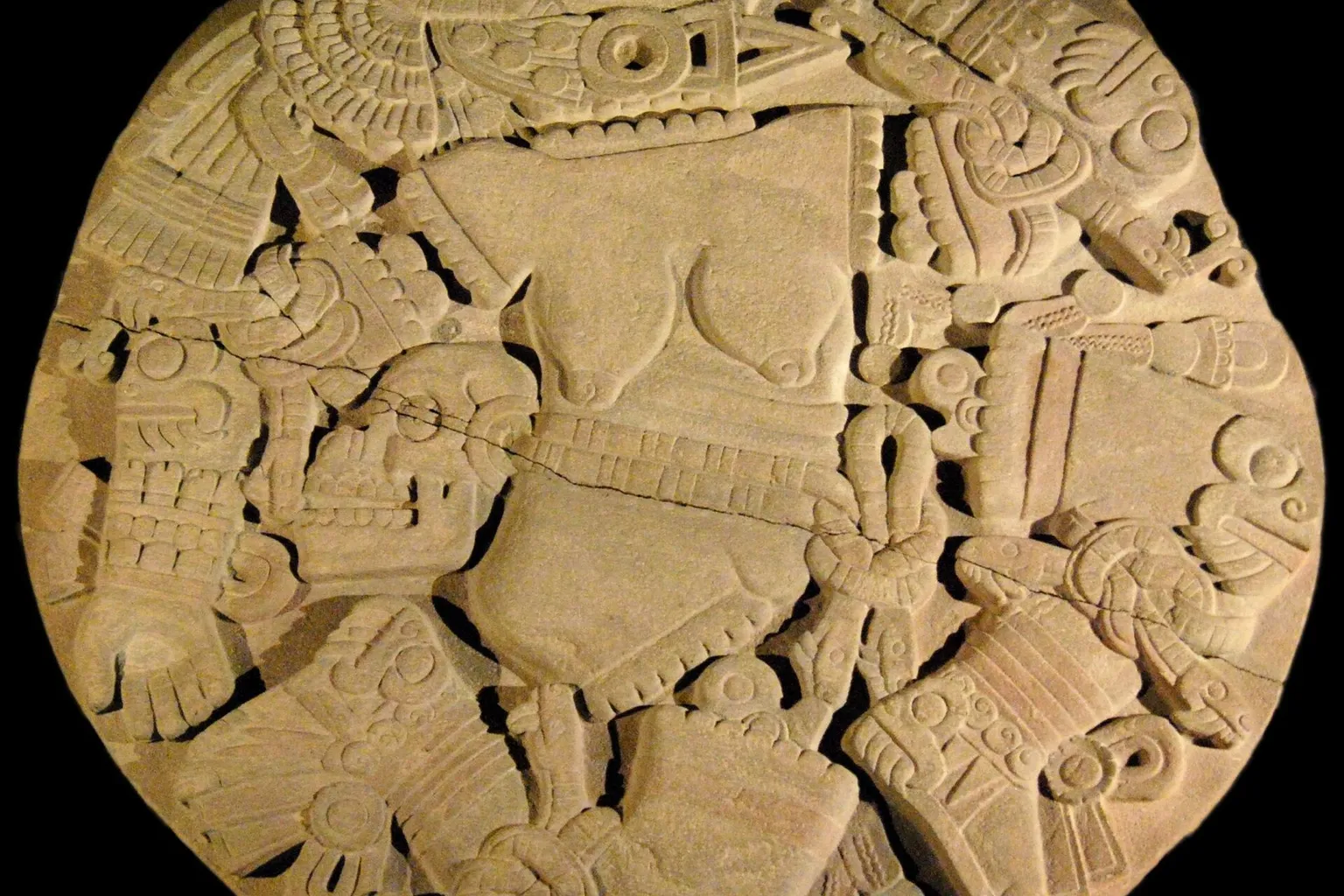
Photo: miguelão / CC BY-SA 2.0 — Wikimedia Commons