Museum Het Schip Tickets: Booking Pitfalls to Avoid
Museum Het Schip runs five regular guided tours on a normal opening day, and the English tour departs at 15:00. The tour is included with general admission.Museum Het Schip · from €18 · Book online
Visitors who book a separate paid tour without checking the museum’s own schedule can therefore pay for access they already have.
Tickets and prices
Museum Het Schip
| Option | Type | Rating | From | |
|---|---|---|---|---|
| Entry ticket · Available today and tomorrowGetYourGuide | entry ticket | ★ 4.112 reviews | from€18 | Book online |
| Official ticket · Regular admissionOfficial | official ticket | — | from€17.50 | Book online |
At the box officeAdult€17.50Official website — hetschip.nl
The main booking issue is simpler: a time slot is no longer required for entry. Museum Het Schip tickets can be bought online or at the museum counter. The correct choice depends on the visitor’s route through Amsterdam, preferred tour language, and eligibility for a discount card. It does not depend on securing a mandatory entry window.
Admission structure and discount eligibility
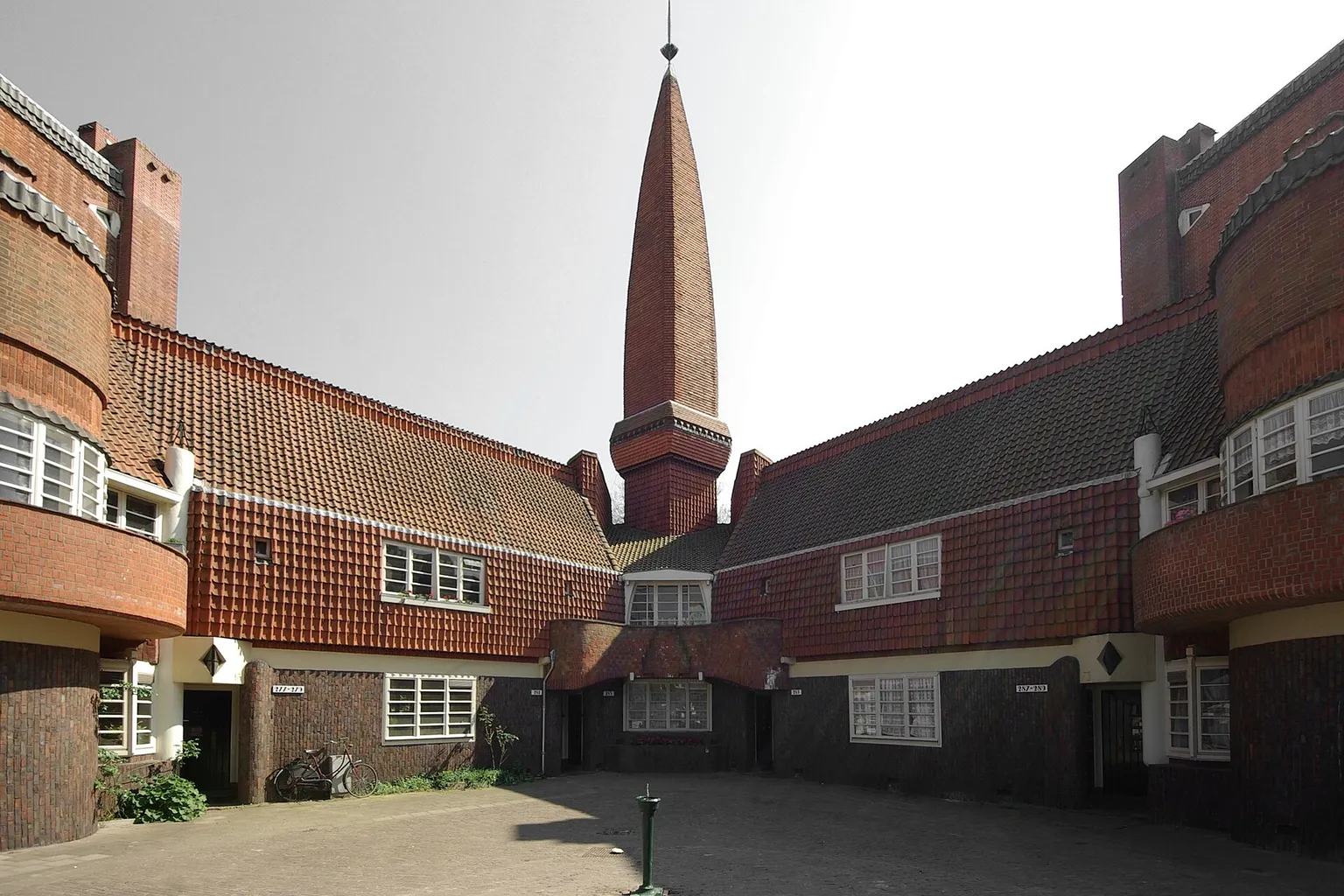
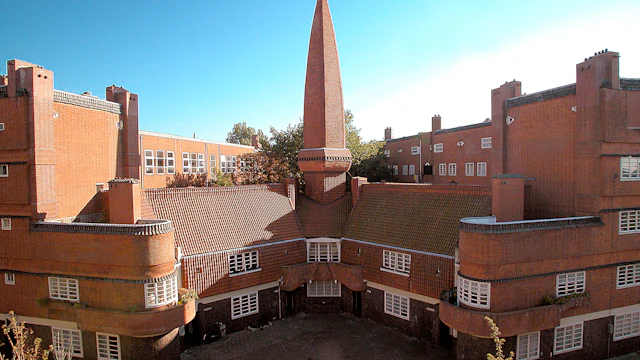
Museum Het Schip presents the history of the Amsterdam School through architecture, social housing, design, and urban planning. The museum is located in the Spaarndammerbuurt, at Oostzaanstraat 45, inside and around the famous brick complex designed by Michel de Klerk.
Admission has several categories. The exact amount should be checked at the time of booking because ticket values can change, but the structure is stable:
- Standard adult admission applies to visitors without a qualifying concession or museum card.
- Student and CJP tickets require the relevant identification.
- Youth tickets cover visitors aged 12 to 18.
- Child tickets cover visitors aged 5 to 12.
- Children under 5 enter free.
- Holders of the Museumkaart, I amsterdam City Card, ICOM Card, Rembrandt Card, Stadspas, and VriendenLoterij VIP Card receive free admission.
- A combination ticket is available for visitors planning to visit both Museum Het Schip and Bartolotti House.
The main risk is not a complex pricing model. It is selecting the wrong ticket category or paying for an external package that adds no useful access.
A valid discount card should be presented at the entrance. A digital confirmation may be accepted for some cards, but the relevant card or proof of eligibility remains the controlling document. A visitor booking a reduced ticket without being able to demonstrate eligibility may need to pay the difference before entry.
The museum’s admission system is therefore best treated as a two-stage decision:
1. Establish whether the visitor already has free access through a recognized card.
2. Select the basic admission category that matches the visitor’s age or status.
The second stage should come after the first. Purchasing a standard ticket before checking Museumkaart or I amsterdam City Card eligibility creates avoidable duplication.
The relevant question is not which platform sells a ticket. It is whether the visitor already has an admission right through a recognized card.
Why mandatory time-slot advice is outdated
Museum Het Schip no longer requires advance time-slot reservations for ordinary visits. This changes the booking logic.
Older travel pages and third-party listings may still describe timed admission as compulsory. That information does not match the current entry arrangement. Visitors can purchase tickets online or buy them directly at the museum counter. A reservation can still be useful for planning, but it is not the same as a mandatory access condition.
This distinction matters for several visitor profiles:
- A traveler moving through the western canal belt and Spaarndammerbuurt can decide on the day without locking in a fixed arrival time.
- A visitor using a city card can proceed directly to the museum and confirm the applicable access process on site.
- A traveler arriving for the English guided tour at 15:00 does not need a separate entry reservation for that tour.
- A group can review the available tour schedule without assuming that a standard online time slot guarantees a place in every guided departure.
- A visitor with a narrow itinerary can buy admission online while retaining flexibility around transport and preceding activities.
The absence of mandatory time slots does not mean that all museum operations are unrestricted. Opening hours still apply. Guided tours depart at set times. A visitor arriving after the final practical entry period may not be able to join the full museum experience even if tickets remain available online.
The distinction is operational:
| Booking element | What it controls | What it does not control |
|---|---|---|
| Online admission ticket | Access to the museum under the selected ticket category | A guaranteed place on every guided tour |
| Museum counter purchase | Same-day admission, subject to opening and operational conditions | Priority over scheduled group activity |
| Time-slot reservation | A planned arrival window, where offered by a platform | The need to purchase a separate guided tour |
| City or museum card | Eligibility for free admission | Automatic priority for a specific tour departure |
| Guided tour schedule | Departure time and tour language | A requirement to pay an additional tour fee |
The practical conclusion is direct. A time slot can be a planning tool. It should not be treated as a compulsory ticket condition unless the museum’s own current instructions state otherwise.
Direct admission versus third-party booking platforms
Third-party booking platforms can be useful when a visitor wants a packaged itinerary, a guide-led architecture walk, or a combined activity. They are less useful when the only requirement is ordinary museum entry.
The central comparison is not simply direct booking against online booking. It is single-purpose admission against bundled distribution.
A direct museum purchase is normally the cleaner route when the visitor needs:
- Standard admission only.
- Access through an existing discount or museum card.
- The freedom to arrive without a fixed time slot.
- A standard guided tour already included in admission.
- The museum’s own operating information rather than a reseller’s summary.
A third-party platform may be relevant when the visitor wants:
- A broader Amsterdam School architecture tour.
- A walking route through the Spaarndammerbuurt with external commentary.
- A combined itinerary involving several attractions.
- A reservation interface integrated with other travel bookings.
- A package marketed in a language or format not offered by the museum directly.
The cost problem is structural. A reseller may present admission as part of a larger product, add booking or service charges, apply currency conversion, or frame an included museum activity as a separate premium feature. The available data does not establish the exact fee structure of every reseller. The safe method is to compare the final checkout total and the precise inclusions rather than the headline label.
A visitor should isolate four items before paying through an external platform:
- Museum entry itself.
- Any guided tour inside Museum Het Schip.
- An external walking tour or guide.
- Platform service, booking, or currency charges.
If the purchase includes only the first two, the platform may be duplicating a service available through ordinary admission. If it includes the third, the additional price may represent the external guide rather than the museum ticket. These are different products and should not be evaluated as if they were identical.
The listing name also requires attention. A product described as an Amsterdam School museum tour may include transportation, a neighborhood walk, or commentary outside the museum. It may not be a simple admission ticket. Conversely, a museum admission product may not include a full architecture walking tour in the district.
The most reliable booking record states the following in clear terms:
- The visitor receives museum admission.
- The ticket category is correct.
- The guided tour is included or excluded.
- The tour language is identified.
- The meeting point is the museum or an external location.
- The cancellation and rescheduling rules are visible.
- The final amount is shown before payment.
A platform that leaves these points unclear is not necessarily invalid. It is simply a poor instrument for a basic admission decision.
Guided tours: included access, fixed departures
Museum Het Schip offers regular 45-minute guided tours as part of standard admission. Departures are scheduled at 12:00, 13:00, 14:00, 15:00, and 16:00. The 15:00 departure is conducted in English.
This schedule changes how visitors should plan Museum Het Schip tour reservations. A separate tour purchase is not required for the regular in-museum guided experience. The relevant decision is whether to align the visit with a departure time.
The 15:00 English tour is the clearest option for visitors who do not speak Dutch. Visitors arriving at another time may still access the museum, but they should not assume that every departure has the same language. The available facts identify the 15:00 tour as the daily English departure. Other language arrangements should be confirmed with the museum before relying on them.
The tour duration is 45 minutes. That figure does not represent the total time required for the visit. Museum Het Schip contains several layers of material:
- The architectural history of the Amsterdam School.
- Michel de Klerk’s design language and use of brick.
- The social-housing context of the complex.
- The historic post office interior.
- The model worker residence.
- Exhibits related to design, construction, and urban life.
- The museum apartment, which has separate accessibility limitations.
Visitors using the guided tour as the only component of the visit should allow additional time for the displays and building interiors. A schedule that allocates exactly 45 minutes may cover the tour but leave no margin for the rest of the museum.
A practical itinerary has three time controls:
1. Arrival before the selected tour departure.
2. Forty-five minutes for the guided component.
3. Additional time for independent viewing and movement through the building.
The tour should also be distinguished from an external Amsterdam School walking tour. The former is an included museum activity. The latter is a separate product with its own guide, duration, route, and meeting point.
This distinction prevents a common booking error: paying for a third-party guided package while assuming it replaces the museum’s internal tour. It may replace it in the itinerary, but not because the museum requires a paid supplement.
Accessibility: the building is not uniformly accessible
The main museum facility is wheelchair accessible and has an elevator. The historic museum apartment is only partially accessible.
That difference should appear in visit planning before tickets are purchased. A general statement that the museum is accessible does not describe every room or route. Historic architecture introduces physical constraints that do not apply to the newer or adapted parts of the museum.
The operational picture is divided:
| Area or feature | Accessibility status |
|---|---|
| Main museum facility | Wheelchair accessible |
| Elevator | Available |
| Historic museum apartment | Partially accessible |
| Entire visitor route | Not uniformly accessible across all historic spaces |
Visitors with mobility requirements should identify which parts of the collection are essential. If the museum apartment is the main reason for the visit, the partial-access limitation is material. If the priority is the main exhibition, architectural interpretation, or post office interior, the accessible parts of the facility may provide a workable route.
The same principle applies to guided tours. A standard tour may move through spaces with different physical conditions. The museum should be contacted in advance for the current route details, assistance procedures, and any limitations affecting a particular mobility device.
This is not a reason to avoid the museum. It is a reason to separate general building access from complete access to every historic interior.
Operating hours and closure dates
Museum Het Schip is open Tuesday through Sunday from 11:00 to 17:00. It is closed on Mondays. It also closes on King’s Day, April 27, Christmas Day, December 25, and New Year’s Day, January 1.
These hours create two basic scheduling constraints. First, the English guided tour at 15:00 occurs within the normal opening window, but late arrival reduces the time available for independent viewing. Second, a Monday itinerary cannot be repaired by purchasing tickets online. Online availability does not override the museum’s weekly closure.
A visit planned around public transport or another Amsterdam attraction should account for the museum’s location in the Spaarndammerbuurt. The district is part of the architectural context, not merely a transfer point. Visitors combining the museum with an architecture walking route should protect time for movement between locations. A ticket confirmation does not shorten the route.
Closure dates also matter for city passes and bundled products. A city card may provide free admission, but it does not make a closed institution available. Third-party calendars can lag behind official holiday changes. The museum’s own opening information should control the final decision.
The safest sequence is:
- Confirm that the selected day is Tuesday through Sunday.
- Exclude the listed annual closure dates.
- Confirm the opening window.
- Select the 15:00 English tour if English commentary is required.
- Allow time for entry, the guided tour, and independent viewing.
- Check accessibility for any historic apartment route.
- Purchase only the admission or package that matches the planned visit.
The booking route that produces the fewest errors
For a standard independent visit, the route is short. First, check whether the visitor holds a qualifying free-admission card. Second, choose the correct age or status category if no card applies. Third, decide whether the 15:00 English tour fits the itinerary. Fourth, buy online or at the museum counter.
The booking platform should be selected after the visit type is known. Reversing that order encourages platform-led decisions. A reseller may display a timed product, a bundled tour, or a package with a different cancellation policy. None of those features is automatically necessary for museum entry.
For visitors comparing options, the following decision rules are sufficient:
- Use direct museum admission for a basic visit.
- Use a city or museum card when eligibility applies.
- Do not buy a separate internal guided tour unless the product clearly adds a service beyond the included museum tour.
- Treat time slots as optional planning devices, not mandatory entry conditions.
- Select the 15:00 departure for the identified daily English tour.
- Verify closure dates before payment.
- Read accessibility information at the level of individual spaces, especially the historic apartment.
- Compare the final checkout total, not only the advertised ticket label.
- Separate museum entry from external architecture walks and neighborhood tours.
Museum Het Schip is a specialist architecture museum. Its value depends on the relationship between object, building, and district. The booking decision should preserve that structure rather than obscure it with unnecessary ticket layers.
The efficient booking is the one that matches the visit: direct admission, the correct eligibility category, and a tour time that the visitor can actually use.
Final route for booking Museum Het Schip
The data produces a clear route. Museum Het Schip tickets are available online and at the museum counter. Advance time slots are not required for ordinary entry. Regular 45-minute guided tours are included with admission, with the English departure at 15:00. Discount-card holders may enter free, subject to the applicable card and validation process. The main facility is wheelchair accessible, while the historic museum apartment is only partially accessible.
The remaining risk sits in interpretation. Visitors should distinguish admission from bundled tours, included museum guidance from external guiding services, and general accessibility from complete access to every historic room.
For a low-friction visit, the relevant actions are:
- Check Museumkaart, I amsterdam City Card, ICOM, Rembrandt Card, Stadspas, or VriendenLoterij VIP eligibility.
- Confirm that the visit falls between Tuesday and Sunday, within the 11:00–17:00 opening window.
- Avoid Monday and the listed annual closure dates.
- Choose the 15:00 English guided tour when English commentary is required.
- Buy standard admission directly when no external itinerary is needed.
- Review the final contents and charges of any third-party package.
- Confirm the route limitations of the historic museum apartment before arrival.
- Allow more than 45 minutes if the visit includes the exhibitions and building interiors.
The booking problem is not technically complex. It becomes complex only when outdated time-slot information, duplicated tour products, and unclear package descriptions are treated as equivalent to the museum’s own admission system.
Practical info
Currency: EUR
Driving: on the right
Emergency number: 112
FAQ
Do I need to reserve a time slot for Museum Het Schip?
Is the guided tour included with Museum Het Schip admission?
What time is the English tour at Museum Het Schip?
Who can enter Museum Het Schip for free?
Is Museum Het Schip wheelchair accessible?
Photo: Janericloebe / CC BY 3.0 — Wikimedia Commons