New York Attorney General Lawsuit Exposes Fraudulent Veterans Charity Scheme
According to the Office of the New York State Attorney General, that is precisely what Attorney General Letitia James alleges in her lawsuit against Healing for Heroes, a Bemus Point–based…
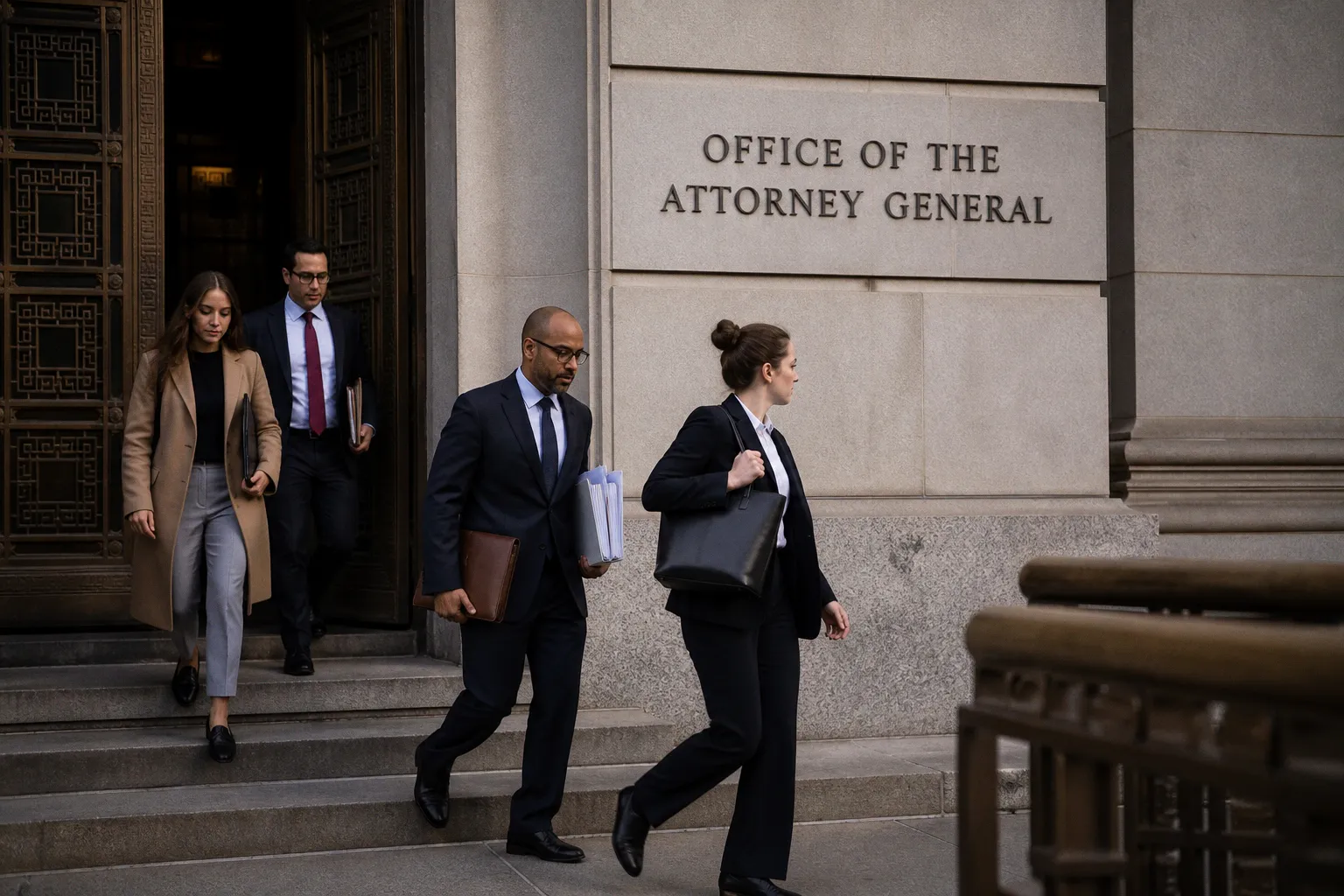
a charity built around a noble promise turns out to be a vehicle for personal enrichment, the ripple effect extends far beyond the organization itself — it shakes the trust that every legitimate nonprofit depends on. According to the Office of the New York State Attorney General, that is precisely what Attorney General Letitia James alleges in her lawsuit against Healing for Heroes, a Bemus Point–based organization that presented itself as an outdoor retreat for disabled veterans but, in practice, appears to have served almost no one beyond its own board. For those of us navigating New York's nonprofit ecosystem, this case is less about one bad actor than about the governance patterns and oversight gaps that allow fraud to take root, and it offers a useful map for the questions every organization should be asking right now.
What the Attorney General Alleges
Healing for Heroes was founded in 2024 with a stated mission of offering free, retreat-style stays to disabled veterans on a 30-acre wooded property in Chautauqua County. The OAG's investigation found that only four retreats were held during 2024 and 2025, and every one of them was attended exclusively by board members, their families, and their friends. When at least one veteran without a close relationship to the organization's leadership expressed interest in attending, that individual was turned away before being able to apply, according to the complaint. The organization later pivoted to brief events built around donated food — gatherings the complaint describes as "Free Pizza & Fire Night" and "Coffee and Donuts" — which lasted only a few hours and cost the organizers virtually nothing.
I want to walk you through the financial picture because this is where the case becomes especially instructive for governance-minded readers. Nearly $100,000 in donations flowed into the organization. Almost half of that sum went to property maintenance and improvements — a bathroom renovation, a new deck — alongside personal shopping, meals, vehicle repair, and gas for board members. The board president, Thomas Nelsen, and the board secretary and treasurer, Jennifer Milchanoski-Nelsen, who also own the property, listed it on Airbnb on at least 32 occasions, telling renters that 100 percent of the proceeds would go to the charity. Instead, $33,312.16 in rental income was deposited into their personal account. Attorney General James is asking the court to dissolve the organization, redirect any remaining assets to charities that actually serve veterans, bar the Nelsens from soliciting funds or holding leadership roles in any New York charity, and impose damages and civil penalties under the state's FAIR Business Practices Act.
Why This Matters Beyond Upstate
It would be easy to glance past a case involving a small charity in Chautauqua County if you sit inside a New York City organization, but I encourage you to resist that instinct. The Attorney General's Charities Bureau oversees every nonprofit registered in the state, and the enforcement theories on display here — misuse of restricted-purpose donations, commingling of charitable and personal funds, board self-dealing, and misleading donor solicitations — apply with equal force to organizations operating in Brooklyn, the Bronx, or Midtown. When one charity betrays its mission, the entire sector absorbs a loss of public confidence, and donors begin to apply suspicion to organizations that have done nothing wrong. That is the kind of legislative friction we all feel in our grant renewals, our individual giving campaigns, and our relationships with institutional funders.
There is also a practical reminder embedded in the structure of the allegations. The Nelsens served simultaneously as board president and secretary-treasurer while also owning the property the charity operated from. That overlap is precisely the kind of conflict of interest that robust governance documents are designed to prevent, and it is the kind of arrangement auditors and regulators look at first when something goes wrong. If your own bylaws permit a single individual or a closely related pair to control finances, contracting, and the physical assets of the organization without meaningful independent review, you are sitting closer to this story than you might like.
A Practical Roadmap for the Coming Weeks
Rather than treating this as simply another news cycle, I would suggest a few concrete steps your team can take in the next month. First, pull your last two IRS Form 990 filings and your most recent audited or reviewed financial statements, and look honestly at the share of expenses directed to program services versus administrative overhead, property costs, and compensation. If your program-ratio story is difficult to explain in a single sentence, that is a signal worth addressing before a journalist, a donor, or a regulator asks the question for you. Second, review your conflict-of-interest policy and confirm that it requires annual disclosure, recusal from votes involving related parties, and independent approval of any transaction between the organization and a board member, employee, or their family. Third, separate the roles of board leadership and financial oversight whenever your bylaws allow, and document the separation in writing. Finally, if your organization solicits donations for a specific program or population, trace a sample of those gifts from deposit to expenditure and confirm that the dollars are actually reaching the stated beneficiaries.
The work of building and maintaining a trustworthy nonprofit is largely invisible when it goes well, and that is exactly why moments like this one matter. Cases like Healing for Heroes remind us that donor trust is not a static asset; it is something we renew every time a board meets, every time a check is cut, and every time we make a promise to a community we claim to serve. The organizations that survive scrutiny are the ones that treat governance as a daily discipline rather than an annual filing, and that is the ecosystem I want to keep building alongside you.