Strengthening the NYC Youth Services Workforce to Secure Universal Afterschool Access
According to Youth Today, a July 2026 report from the Collaborative for Advancing Youth Development (CAYD) quantifies the structural drag on New York City's youth services workforce and proposes a…
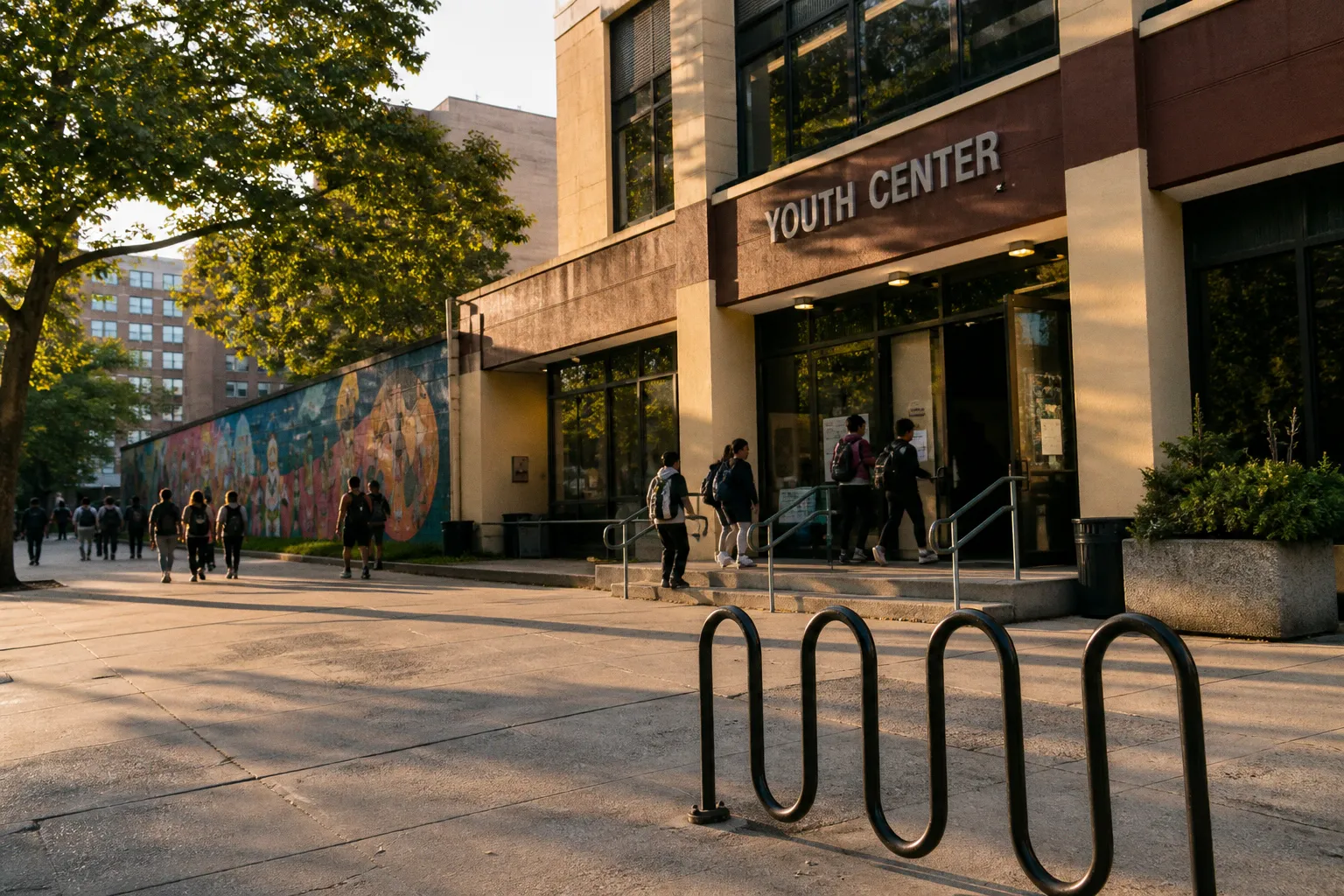
According to Youth Today, a July 2026 report from the Collaborative for Advancing Youth Development (CAYD) quantifies the structural drag on New York City's youth services workforce and proposes a bifurcated remediation plan. The recommendations emerged from an April 14 State of the Sector convening at the CUNY Graduate Center attended by more than 270 practitioners, nonprofit leaders and policymakers. The analysis is consequential because NYC's commitment to universal afterschool access is treated in the report as contingent on workforce stability — a dependency the document flags as non-negotiable.
The workforce baseline
CAYD characterizes the sector as one powered by relationships and community knowledge, but constrained by four measurable conditions: part-time roles without benefits, chronic understaffing, compliance overhead, and inconsistent funding cycles. The report references the NYC Commission on Universal After School 2025 Interim Report as a framing document. At the convening, NYC Department of Youth and Community Development Commissioner Sandra Escamilla-Davies identified the dependency directly: "Universal afterschool depends on a stable, supported workforce."
The pressure is not sector-specific. A United Way survey, referenced by businessrecord.com, reports rising service demand paired with persistent workforce constraints across health and human service nonprofits — a parallel signal from the broader nonprofit ecosystem that reinforces the CAYD findings.
Two-track recommendations
CAYD organizes its response into two operational tiers with distinct implementation horizons.
- Quick wins — deployable by individual organizations now: stronger 90-day onboarding protocols, defined career ladders, and peer-led learning structures.
- Systems investments — requiring municipal coordination: centralized hiring and clearance infrastructure; credentialing pipelines through NYC Public Schools, CUNY, SUNY, and the Summer Youth Employment Program; compensation increases; cross-agency paperwork consolidation; and sector financial sustainability through city-funded healthcare, retirement supports, expanded full-time roles, and predictable contract terms.
Operating indicators
- Contract renewal cadence and term length across youth services providers.
- Full-time-to-part-time staff ratios at OST organizations.
- Time-to-clearance for new hires under any centralized system pilot.
- Enrollment and completion volumes in CUNY/SUNY credentialing pipelines.
- Degree of alignment between CAYD recommendations and the NYC Commission on Universal After School's next reporting cycle.
CAYD is a partnership that includes Change Impact, CUNY School of Professional Studies Youth Studies Department, ExpandED Schools, Hello Insight, New York State Network for Youth Success, Partnership for Afterschool Education, and Youth INC.