New Data Foundation Roadmap Targets Nutrition and Food Security Gaps
Against this backdrop, the Data Foundation released a community-first Learning Agenda on Nutrition, Hunger & Health on September 3 — a research roadmap built with nearly 50 experts across government…
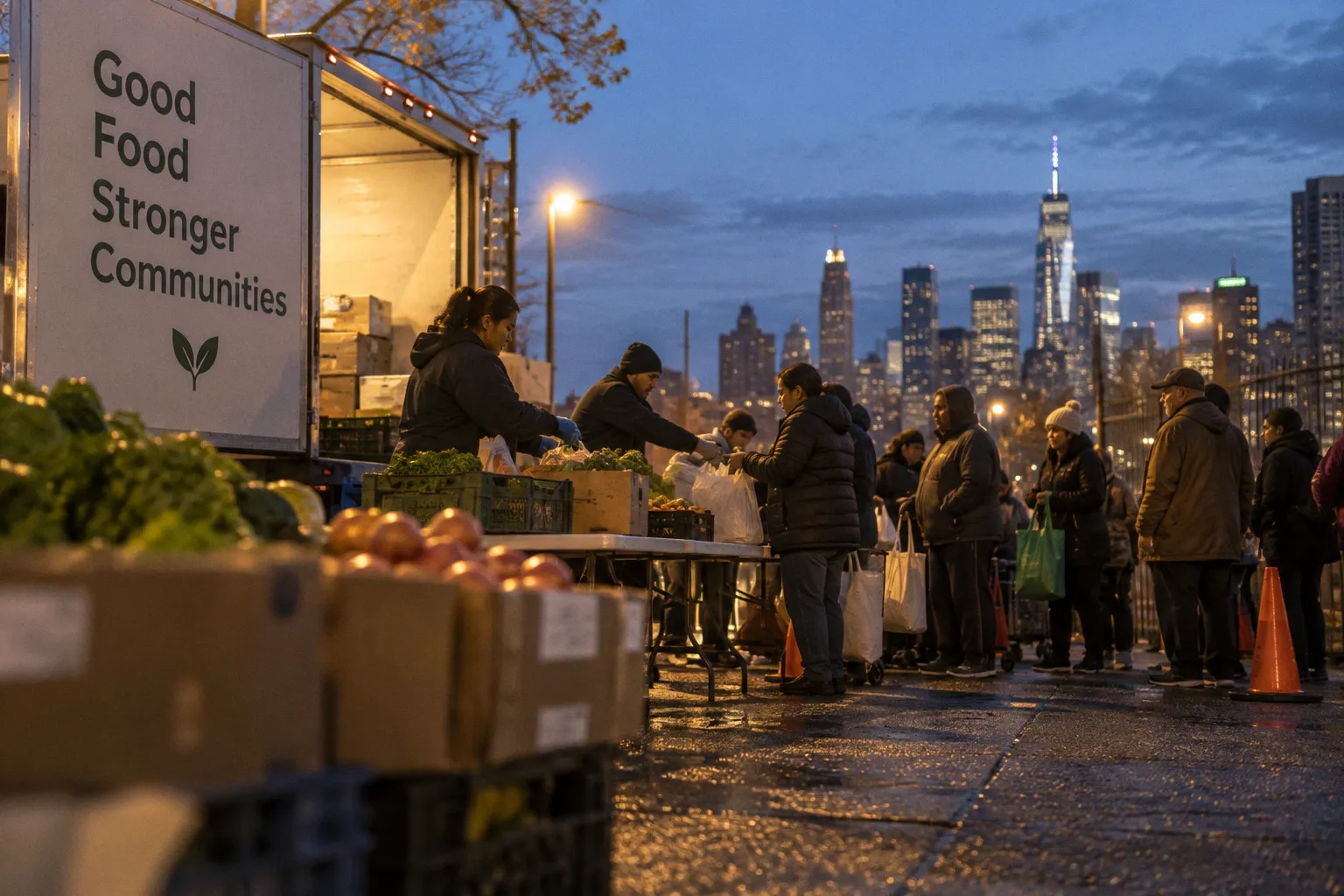
Thirty years of federal measurement have tracked food insecurity in American households from 11.9 percent in 1995 to 13.7 percent in 2024. The needle has barely moved. Against this backdrop, the Data Foundation released a community-first Learning Agenda on Nutrition, Hunger & Health on September 3 — a research roadmap built with nearly 50 experts across government, academia, public health, and community organizations. For NYC nonprofits operating in nutrition assistance and food security, the agenda's emphasis on cross-sector evidence infrastructure signals where federal and foundation research dollars are likely to concentrate.
The Data Gap the Agenda Addresses
The Learning Agenda identifies four priority research domains: evidence infrastructure, nutrition assistance, social determinants of health, and food as medicine. The framing is deliberate. Rather than following a single agency's strategic plan — the traditional siloed approach — the Data Foundation structured the document as a topical roadmap cutting across organizational lines.
The process involved six focus groups and a cross-sector workshop. Sixteen experts participated in an initial round; a subsequent session drew 33 participants, including frontline researchers, community organizations, academics, and federal partners. The Robert Wood Johnson Foundation provided funding.
Sara Stefanik, Director of the Data Foundation's Center for Evidence Capacity, characterized the core problem: billions in public and private investment have not translated into scaled interventions. The agenda's stated goal is better coordination, standards, and data infrastructure to produce evidence that decision-makers across sectors can actually use.
Why NYC Nonprofit Operators Should Care
New York City's nonprofit ecosystem — food pantries, community health organizations, benefit navigation services — sits at the intersection of every domain the agenda names. The document's emphasis on participatory process and community-led research priorities has direct operational implications for organizations seeking foundation grants aligned with evidence-based frameworks.
Nick Hart, President and CEO of the Data Foundation, referenced the Foundations for Evidence Based Policymaking Act, noting that while the final law narrowed requirements to agency-level plans, the agenda serves as a model for breaking down institutional silos. For NYC organizations tracking federal funding streams, this signals a continued push toward cross-agency, cross-sector evidence building — a posture likely to shape grant criteria in fiscal years ahead.
Takeaways for NYC Nonprofit Professionals
- Evidence capacity is the new baseline. The agenda prioritizes data infrastructure over programmatic output. Organizations lacking measurable outcome data will find themselves at a disadvantage in competitive funding environments.
- Cross-sector collaboration is structural, not aspirational. The Learning Agenda's participatory model — community organizations co-authoring research priorities alongside federal partners — is being positioned as replicable infrastructure, not a one-off exercise.
- Food-as-medicine research is a growth vector. The agenda names this domain explicitly. NYC nonprofits integrating nutrition programming with healthcare partnerships should document protocols and outcomes now.
- The 13.7 percent figure is the benchmark. Federal food insecurity measurement via the CPS-FSS concluded its 30-year run in 2024. Whatever replaces it will shape how the sector defines and funds its work for the next decade.