Immigrant Service Directories in NYC: Four Search Paths
The four NYC immigrant service directories that exist today don't talk to each other. They were built by separate agencies with separate funding streams, separate data schemas, and separate definitions of what counts as a successful warm handoff.
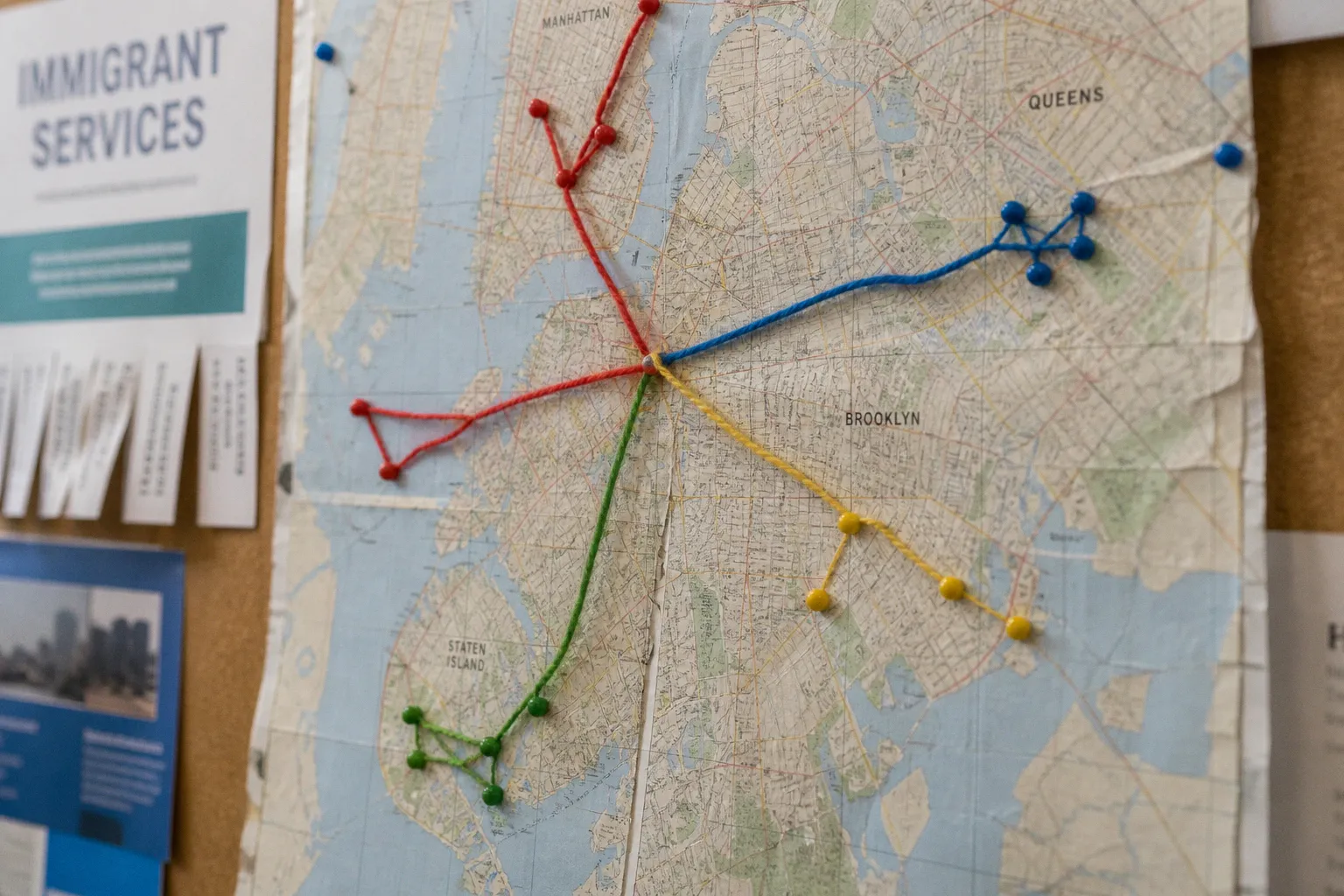
For someone with no legal status, no English fluency, and no working knowledge of which agency funds which nonprofit, the question is rarely whether help exists. The question is which directory has the right door open at the right hour — and which funnel sends you home with a referral slip and no actual next step. We're going to walk through all four ecosystems so you stop wasting hours on the wrong one.
Compare car rental deals in United Kingdom
See available offersPartner link — DiscoverCars comparisonThe City Front Door: MOIA, ActionNYC, and ACCESS NYC
The Mayor's Office of Immigrant Affairs runs what is technically the most authoritative starting point on the block: the MOIA Directory of Immigrant Serving Organizations. It splits the universe into four working buckets — Legal Services; Education and English Classes; Employment, Training, and Financial Empowerment; and General Services, Case Management, and Referrals. That's not a marketing taxonomy. That's the lived experience of someone whose paperwork gets filed under one column today and a different one tomorrow, depending on which intake staffer is at the desk.
If you need a lawyer and you can't afford one, the city's legal arm is ActionNYC, also called the MOIA Immigration Legal Support Centers. The hotline is 1-800-354-0365, or dial 311 and say "Immigration Legal." Hours are Monday through Friday, 9 a.m. to 6 p.m. — no weekends, no evenings, no overnight triage. Calls are free, screens are confidential, and representation comes at no cost when you qualify.
Here's the cliff nobody puts in the press release: eligibility runs at 200% of the Federal Poverty Level for those city-funded legal slots. A family of four earning a dollar above that line finds out, somewhere deep in the intake forms, that they're technically over the threshold and technically on their own. The directories don't warn you. They hand you a list of providers and a tight smile.
The directories don't warn you about the eligibility cliff. They hand you a list of providers and a tight smile.
The third city tool worth knowing is ACCESS NYC, run by the Mayor's Office for Economic Opportunity. It screens eligibility for more than 30 city, state, and federal programs — and many of those programs don't require proof of legal immigration status to apply. In principle, that makes it the only directory in this list that pretends not to ask the question everyone in the room is afraid to ask. In practice, the screening logic is a flowchart dense enough to occasionally confuse case managers who've been on staff for years. Use it. Trust the answers. Have a human verify anything that decides whether you'll feed your family next month.
State Infrastructure: The ONA Hotline and What It Actually Does
The New York State Office for New Americans — ONA, created in 2012 — runs what is, by raw hours of coverage, the most generous immigrant hotline in the state: 1-800-566-7636. The New Americans Hotline is free and anonymous, and offers referrals in over 200 languages. Hours are Monday through Friday, 8 a.m. to 8 p.m., and Saturday and Sunday, 9 a.m. to 5 p.m.
That schedule matters. Seven days a week, twelve hours on weekdays, ten on weekends. Anyone who has ever watched a noncitizen panic-scroll their phone at 10 p.m. on a Saturday while trying to figure out whether the immigration court date taped to their kitchen table was real will tell you the state invested real money into making sure that line was actually open. The service is structured to be anonymous and confidential — a baseline the immigrant-services world has spent two decades negotiating into contracts and hotline scripts, and any caller is right to expect as a floor.
What ONA is not, however, is a searchable online directory. It's a phone line that hands you referrals. That's excellent for someone who speaks one of those 200 languages and can navigate a phone tree under stress. It's considerably less helpful for someone trying to Google their way through a crisis at 1 a.m. on a Tuesday, when the line has been dark for five hours and the case clock keeps bleeding. Treat ONA as the warm body on the other end of the line, not as a website.
Legal Advocacy: LawHelpNY and the National Immigration Legal Services Directory
When the question is specifically legal — asylum, U-visa, battered spouse waivers, DACA renewals, removal defense — the directories that matter shrink fast. Two of them carry the weight.
LawHelpNY is the searchable New York State portal where you can filter by specific immigration issue. That's the part glossy brochures love to mention and the part that turns out to be enormously useful: not every legal aid shop takes every case. Some only do asylum. Some only do naturalization. Some only take domestic-violence-based immigration petitions. The filter exists so you don't spend three weeks calling intake lines that were never going to help you in the first place. Use the filter. Read it like the table of contents it is.
The National Immigration Legal Services Directory is the larger net. Run jointly by the Immigration Advocates Network and Pro Bono Net, it lists over 900 free or low-cost nonprofit immigration legal services providers across all 50 states, with robust New York State coverage. When LawHelpNY comes up empty or too thin, this is the wider cast.
Here's the thing the directories quietly do not say. Both LawHelpNY and the National Directory list only nonprofit providers. If your cousin's friend's brother gave you the number of a guy who does immigration cases out of a strip-mall office with a Venmo handle, that guy is not in these lists, and these lists will not save you from him. Use them as the verified legal-aid floor — and you'll never get quoted a five-figure fee for a case a nonprofit would have handled for free.
Picking the wrong directory at the wrong hour means another week of waiting while the case clock bleeds.
Community Toolkits: NYIC's Translated Library and the Comptroller's Worker-Focused Guide
The fourth path doesn't run through government at all. It runs through coalitions that have been doing this work long enough to know which page of which PDF a frightened client actually reads.
The New York Immigration Coalition (NYIC) represents more than 200 immigrant and refugee rights groups across the state. They publish the NYS Community Toolkit, updated regularly and translated into Spanish, Arabic, Bengali, Burmese, Chinese, French, Haitian Creole, Karen, Swahili, Urdu, and Yoruba. That's not marketing fluff. That's a recognition that the directory ecosystem collapses the moment the printed page assumes English literacy. NYIC publishes in the languages that show up at the kitchen tables the rest of the directory world pretends don't exist.
Then there's the NYC Comptroller's Immigrant Workers Resource Guide, launched on October 28, 2024, built by the Bureau of Labor Law and Workers' Rights. This one is narrower than the others — it focuses on workers' rights, wage theft, retaliation, unsafe conditions, the kinds of cases where a noncitizen worker is being exploited precisely because of their status. If the issue is the boss, not the visa, this is the directory that was built for you. It lists the organizations that will, in fact, return your call.
Which Directory Do You Actually Use First?
It depends on the crisis and the clock. Here's how the four ecosystems stack up for an immigrant in NYC trying to find their footing fast.
| Path | Best for | Hours / Access | Languages | Cost |
|---|---|---|---|---|
| MOIA + ActionNYC | City-funded legal representation, case management referrals | M–F 9 a.m.–6 p.m. (hotline); online directory 24/7 | English; multilingual intake via partner CBOs | Free screening; free representation if ≤200% FPL |
| ACCESS NYC | Pre-screening for 30+ programs regardless of status | Online screening 24/7 | English; select translated content | Free |
| ONA New Americans Hotline | Referrals, multilingual intake, after-hours reach | M–F 8 a.m.–8 p.m.; Sat–Sun 9 a.m.–5 p.m. | 200+ languages | Free |
| LawHelpNY / National Immigration Legal Services Directory | Legal-only cases — asylum, status, waivers, deportation defense | Online search 24/7 | English; some translated resources | Free or sliding scale (nonprofit providers only) |
| NYIC Toolkit + Comptroller's Worker Guide | Community-translated how-tos; worker-side rights and protections | Online library, regularly updated | Spanish, Arabic, Bengali, Burmese, Chinese, French, Haitian Creole, Karen, Swahili, Urdu, Yoruba (NYIC); English (Comptroller) | Free |
The honest answer for any of us who has watched a real case unfold: start with the directory that matches your immediate legal exposure, then layer in the others. If you're facing court, you don't begin with ACCESS NYC; you begin with LawHelpNY or the National Directory, and you call ActionNYC first thing the next weekday morning. If your landlord just changed the locks and you're sleeping in your car, NYIC's translated toolkit or ACCESS NYC comes before anything calling itself a legal directory, because the eviction clock runs faster than the immigration one.
The Reality Check Leadership Doesn't Want to Print
Four directories exist. They overlap, they don't sync, and the eligibility cliffs between them still swallow real families. The MOIA directory's buckets don't talk to LawHelpNY's filters. The ONA hotline can't refer you to a slot that ActionNYC already filled that morning. The NYIC toolkit doesn't load in every language a street-level caseworker actually speaks.
Until these four ecosystems share a back-end schema — until a screening done on ACCESS NYC automatically lights up matching ONA referrals and matching LawHelpNY providers — the burden of stitching them together falls on the person with the least bandwidth to do it. That's the structural failure. Every grant report that claims "warm handoffs" between these directories is, at best, aspirational theater. We have built four separate waiting rooms. The next round of city and state funding should not pay for a fifth; it should pay to knock down the walls between the four we already have.
If you're running one of these organizations, the question for your board isn't whether your directory is in print. It's how a frightened caller gets from one to the next without burning the hours they don't have.